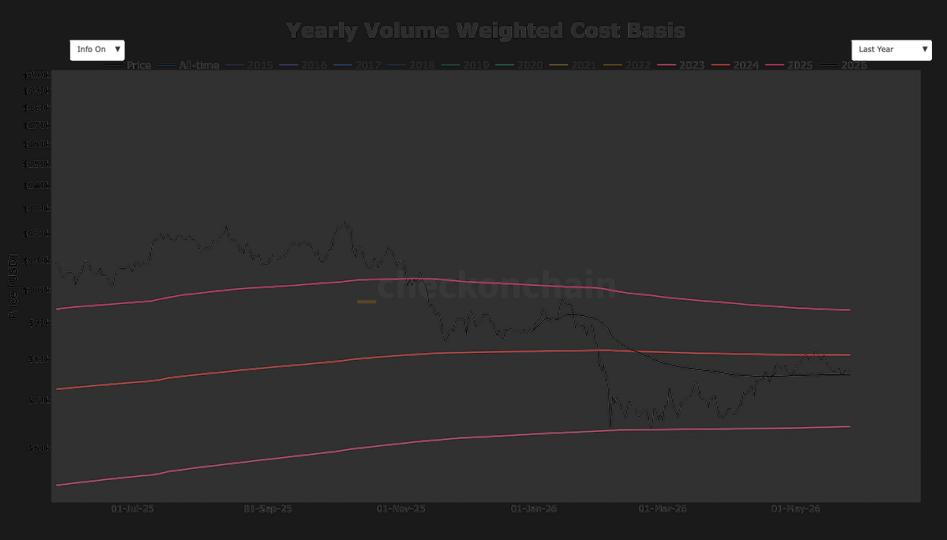
So, Bitcoin can’t even clear its 200-day moving average anymore. We’re talking about a level, around $82,400, that’s supposed to separate a sad little bear-market bounce from an actual recovery. Instead, it’s sitting around $77,900, looking decidedly unimpressed. And guess who’s here to explain why the party’s over? Our old pal, CryptoQuant. They’ve got the spreadsheets, they’ve got the charts, and apparently, they’ve got the bad news.
Look, these guys are saying the rally that got us here — you know, the one fueled by folks piling into use futures, throwing cash at spot markets, and shoving money into those shiny new U.S. spot Bitcoin ETFs — has basically run out of gas. Their ‘Bull Score Index’ just tanked to 20. ‘Extremely bearish,’ they’re calling it. Sound familiar? Yeah, it’s the same vibe from February and March when Bitcoin was bumping around between $60,000 and $66,000. Just another Tuesday in crypto, I guess.
Where Did All the Buyers Go?
This isn’t rocket science, but you wouldn’t know it from the breathless PR that usually accompanies any upward tick in crypto prices. The real story here, the one buried under the hype, is simple economics: demand has evaporated. CryptoQuant points to the Coinbase premium, which has been stubbornly negative. What does that even mean? It means U.S. investors, the supposed drivers of this whole boom, aren’t willing to pay extra to get their hands on Bitcoin. They’re not scrambling. They’re not FOMOing. They’re… not buying.
And those ETFs? They’ve gone from being the darling of Wall Street to a source of outflows. We’re talking about billions gone in just two weeks. This isn’t a dip; it’s a reversal. The six weeks of inflows that supposedly propelled Bitcoin to the moon have now been more than offset. It’s almost like the money printers ran out of ink.
Is Anyone Actually Still Buying?
If you’re looking for demand, well, you’re going to have a tough time. The ‘Kimchi premium’ in Korea? Gone. Zero above-normal demand there. Hong Kong’s ETFs? They’re barely scraping by, posting a few million dollars in daily volume, which in the grand scheme of things, is pocket change. When the major demand gauges across the U.S., Korea, and Hong Kong are all showing weakness, that’s not a blip; that’s a trend. A worrying one.
So, what’s next? If this correction keeps pushing lower, CryptoQuant is pointing to $70,000 as the next big on-chain support level. That’s where the ‘realized price’ for traders sits, the price where most of the Bitcoin was bought. It held rallies before, back in October and January. The question is, will it hold this time, with the buyers seemingly packing their bags?
It’s a stark reminder that for all the talk of a new bull run, the underlying mechanics of supply and demand still matter. And right now, demand is not looking so hot. It’s a classic Silicon Valley playbook: create a frenzy, attract the money, and then, when the music stops, blame the market. Except this time, the market is just… gone.
I’ve seen this movie before, and the ending usually involves a lot of people wondering where their money went. The 200-day average isn’t just a line on a chart; it’s a psychological barrier, and failing to clear it with conviction, especially with demand signals flashing red, suggests we’re in for a rougher patch than the bulls want to admit.
U.S. spot bitcoin ETFs have seen roughly $2 billion in outflows over the past two weeks and key demand gauges in the U.S., Korea and Hong Kong are soft, leaving $70,000 as the next major on-chain support level if the correction deepens.
This isn’t just about Bitcoin, either. The fallout from weak demand here ripples through the crypto ecosystem. It’s a warning sign for anyone betting on easy money and perpetual growth fueled by speculation alone.
🧬 Related Insights
- Read more: Tor Project Fuels Web3 Push for Online Freedom
- Read more: Minnesota Banks Gain Green Light for Crypto Custody
Frequently Asked Questions
What does Bitcoin’s 200-day moving average signify?
The 200-day moving average is a widely watched technical indicator that signals the long-term trend of an asset. A price above it is often seen as bullish, indicating a sustained recovery, while a price below it can suggest a bearish trend or a bounce within a bear market.
Will Bitcoin drop to $70,000?
CryptoQuant’s analysis suggests $70,000 is the next significant on-chain support level if Bitcoin’s current correction deepens. However, market movements are inherently unpredictable, and this is an analytical projection, not a guarantee.
Are U.S. spot Bitcoin ETFs still a good investment?
Recent outflow data from U.S. spot Bitcoin ETFs indicates a weakening of investor demand, prompting concerns about their short-term performance. Investors should conduct thorough research and consider their risk tolerance before investing.