A flurry of large block trades in BlackRock’s Bitcoin ETF, IBIT, made headlines this week, but the real story for traders isn’t the ETF’s volume. It’s where the capital is actually going.
Bitcoin’s share of the total digital asset market, its dominance rate, has dipped from 61.20% to 60% since early May. Concurrently, Tether’s USDT has seen its dominance climb from 7% to 7.5%, and Circle’s USDC has nudged up from 2.8% to 3%. We’re witnessing a clear rotation, not into riskier altcoins, but back into tokenized fiat.
This isn’t rocket science. Bond markets are signaling that the Federal Reserve might maintain higher interest rates for longer than anticipated. When yields on safe assets like U.S. Treasuries are attractive, speculative assets that offer no inherent yield or cash flow—looking at you, Bitcoin—become less appealing. It’s a fundamental equation: risk-free return versus speculative growth. For many, the math is currently favoring the former.
This isn’t a novel phenomenon. We saw a similar pattern emerge in late January, preceding a significant Bitcoin sell-off that saw prices dip to $63,000 in early February. The implications are clear: these dominance shifts demand rigorous attention from anyone playing in this space.
Bitcoin itself was recently trading around $75,900, having seen intraday lows near $75,200 following the news of that massive block trade in IBIT. Yet, the broader ETF trend tells a different story. The 11 spot Bitcoin ETFs collectively shed over $333 million on Tuesday, adding to a two-week outflow totaling $2.26 billion. Meanwhile, where’s the money flowing? Into gold and precious metals funds, apparently. Talk about a rotation. Altcoins like Ether, XRP, and Solana, along with the CoinDesk 20 Index, have each seen approximately 2% drops in the past 24 hours.
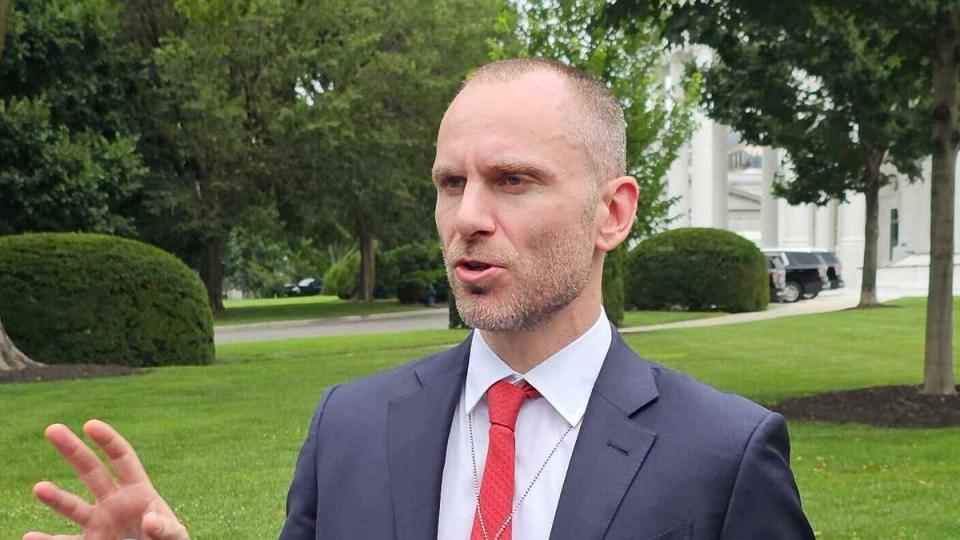
Alex Kuptsikevich, chief market analyst at FxPro, puts it succinctly:
If cryptocurrencies are once again acting as a barometer of sentiment in global financial markets, this looks like an early signal of a reversal towards profit-taking. Perhaps investors prefer to take their money off the table ahead of the start of summer, beginning with the riskiest segment.
In traditional markets, Nasdaq e-mini futures are hitting record highs, while WTI oil has slipped 3% to $90 a barrel. Today’s U.S. ADP employment report could inject further volatility. Stay sharp.
The Shift to Safety: Why Now?
The narrative that Bitcoin is a digital store of value, akin to digital gold, faces a stern test when the U.S. dollar, even in its tokenized form, offers a more immediate and quantifiable yield. The current market dynamics suggest that the speculative fervor of earlier this year is giving way to a more pragmatic risk assessment. Investors aren’t just looking for returns; they’re scrutinizing the risk-adjusted returns, and in this environment, dollars are winning.
This trend also highlights a maturing crypto market. Early days saw a mad dash for any digital asset promising exponential gains. Now, as institutional capital floods in, the focus shifts to more sophisticated capital allocation strategies. The emergence and increasing dominance of stablecoins like USDT and USDC are not just about ease of trading; they represent a functional bridge for capital to move rapidly between risk-on and risk-off positions within the broader financial ecosystem. It’s a sign of sophistication, yes, but also a clear indicator of prevailing market sentiment.
Is Bitcoin’s Rally Over?
It’s too early to declare the end of Bitcoin’s bull run. However, the current data points to a significant recalibration. The capital flowing into stablecoins isn’t necessarily capital leaving the crypto ecosystem entirely; it’s often a tactical move to de-risk while staying liquid and ready to redeploy. But the preference for dollar-pegged assets over yield-less Bitcoin, especially when traditional markets offer attractive yields, is a powerful signal.
The historical correlation between rising interest rates and decreased appetite for non-yielding speculative assets remains a formidable headwind for Bitcoin. The notion that Bitcoin would decouple from macro conditions has largely proven to be wishful thinking. Its performance is still inextricably linked to liquidity and the cost of capital.
When large investors, like the entity that dumped over a billion dollars of IBIT shares, signal a move to profit-taking or a de-risking strategy, it resonates. This isn’t just retail FOMO; it’s institutional strategy at play. The fact that Bitcoin has fallen to the 13th largest asset globally, as reported by CoinDesk, further underscores the shifting tides. The allure of AI and precious metals, for instance, is currently overshadowing Bitcoin’s narrative.
🧬 Related Insights
- Read more: Fed Rate Cuts Scrapped, But Bitcoin Stays Unbothered [2026]
- Read more: Crypto Sees $1B Outflow Amid Geopolitical Jitters
Frequently Asked Questions
What does USDT and USDC dominance mean? USDT and USDC dominance refers to their percentage share of the total cryptocurrency market capitalization. An increase suggests traders are allocating more of their capital to these dollar-pegged stablecoins, often as a sign of de-risking or seeking stability.
Will higher interest rates hurt Bitcoin? Higher interest rates generally make interest-bearing assets like bonds more attractive, reducing the appeal of non-yielding speculative assets like Bitcoin. This can lead to decreased investment in Bitcoin and potentially lower prices.
Is this a sign of a crypto market crash? While a rotation into stablecoins can signal risk aversion and precede price declines, it doesn’t automatically mean a full-blown crash. It often indicates profit-taking or a strategic shift to safety, with capital ready to re-enter the market when conditions improve.