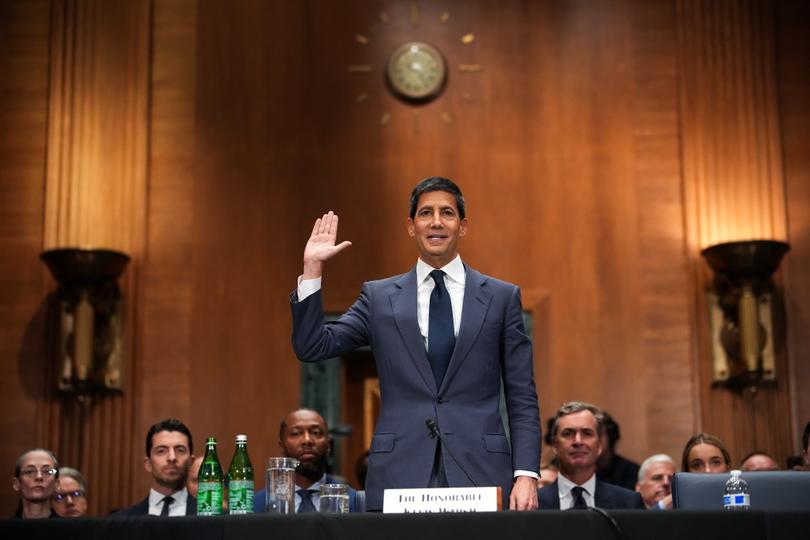
That gut-punch feeling when the market turns on a dime. Bitcoin’s recent nosedive is a stark reminder: no one’s truly in control, and expectations can flip faster than a crypto hodler’s sentiment. One moment, the crypto world was practically singing hosannas about Kevin Warsh potentially taking the Federal Reserve helm. He’d spoken favorably about Bitcoin, even criticized central bank digital currencies – music to the ears of the decentralized finance faithful. It was supposed to be a green light, a signal for easier money, lower yields, and the sweet, sweet liquidity that fuels digital asset booms.
But here’s the thing: the market doesn’t just cheer for friendly faces. It reacts to the cold, hard data. And the data, in this instance, screams higher interest rates. The 2-year US Treasury yield, that hyper-sensitive bellwether of near-term Fed policy, has been staging its own dramatic ascent, climbing past 4.14%. This isn’t just noise; it’s a direct signal that traders are no longer banking on swift rate cuts. In fact, CME data paints a picture where rates might even tick upwards, with futures pricing in a possible 25 basis point hike in December. It’s like watching a tidal wave of tightening policy build on the horizon, even as everyone was busy admiring the sunshine.
Is This the End of the Crypto Bull Run?
Historically, when the 2-year Treasury yield dances above the Fed’s target rate, it’s a playbook for tighter monetary policy. BCA Research data, stretching back three decades, confirms this pattern: this gap often signals markets pricing in a more hawkish future. Conversely, when the yield dips below the Fed funds rate, it’s usually a herald of impending cuts. This shift is fundamentally corrosive to the bullish case for Bitcoin, which thrives on lower real rates, cheaper borrowing costs, and a general sense of financial abundance. When liquidity dries up and borrowing gets expensive, speculative assets like BTC often feel the pinch first. It’s like trying to grow a delicate orchid in a desert – the conditions just aren’t right.
And then there’s the historical precedent of Fed chair transitions. Analyst Lucky, digging into the charts, unearthed a rather grim pattern: BTC has historically taken a beating during these high-stakes handovers. We’re talking about an 84% crash after Janet Yellen stepped in, a 73% plunge under Jerome Powell’s initial tenure, and a 60% drop when he started his second term. Warsh’s arrival has, so far, followed this decidedly bearish script, with a sharp BTC decline. It suggests traders are once again adopting a ‘wait and see’ posture, de-risking their portfolios until absolute clarity emerges from the new Fed chief.
Warsh: Inflation Hawk, Not Crypto Angel
The irony, of course, is palpable. Kevin Warsh, the man many in the crypto community pinned their hopes on for a more innovation-friendly regulatory future, is also a deeply entrenched inflation hawk. As analyst Crypto Patel pointed out, “Crypto-friendly on regulation is NOT the same as dovish on rates.” This is the critical distinction that many seem to have glossed over in their rush to embrace the perceived pro-crypto narrative. Warsh’s mandate, especially in the face of persistent inflation risks—fueled by everything from geopolitical tensions like the Iran conflict to an enduringly tight labor market—is to ensure price stability. He’s not going to sacrifice that to give Bitcoin a boost.
This isn’t about individual preferences; it’s about the core responsibilities of the Federal Reserve. The central bank’s primary job is to manage inflation and employment, not to nurture speculative asset classes. While Warsh may indeed favor private sector innovation and steer clear of a heavy-handed approach to digital currencies, his primary focus will undoubtedly remain on macroeconomic stability. That means that if the data suggests inflation is sticky, or the economy is overheating, expect him to act decisively, potentially even tightening policy further. It’s a classic case of a fundamental economic reality crashing headfirst into a hopeful narrative.
The market’s reaction is a powerful, if brutal, validation of this principle. It’s a wake-up call that the macroeconomic backdrop still reigns supreme, often overshadowing even the most celebrated personnel changes. The era of cheap money, which has undeniably fueled so much of the recent tech and crypto exuberance, might be entering a more challenging phase. And for Bitcoin investors, this means bracing for what could be a prolonged period of volatility, dictated not by sentiment, but by the persistent, unyielding forces of global monetary policy. The future, as always, remains uncertain, but the present signals a clear warning: the Fed isn’t suddenly your best friend, no matter who’s in charge.
“Crypto-friendly on regulation is NOT the same as dovish on rates,” he said.
🧬 Related Insights
- Read more: Why Bitcoin Mining Giants Are Dumping Coins—and What It Means for Crypto’s Future
- Read more: Justin Sun’s Frozen WLFI Bag Drops $11M — Liquidation Fears Ignored
Frequently Asked Questions
What is the 2-year US Treasury yield? The 2-year US Treasury yield reflects the interest rate investors demand for lending money to the US government for two years. It’s a key indicator of short-term interest rate expectations.
Will Kevin Warsh hike interest rates? While Kevin Warsh has a reputation as an inflation hawk and market data suggests a potential hike, the Federal Reserve’s decisions are data-dependent and made by the committee as a whole, not solely by the chair.
How does rising interest rates affect Bitcoin? Rising interest rates generally make holding riskier assets like Bitcoin less attractive compared to safer investments like bonds, potentially leading to price decreases. Higher rates also increase borrowing costs, impacting investment in speculative markets.