Here’s the thing: you’re probably not sleeping any better tonight because Bitcoin decided to do a little jig around $78,000. For the average person, this isn’t about diversifying their 401(k) into digital gold. It’s about market makers and algorithms playing a zero-sum game while the world teeters on the brink of… well, more uncertainty.
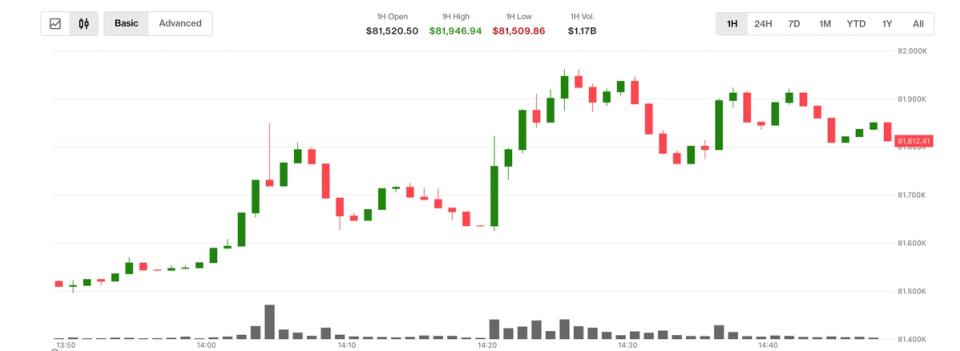
This latest Bitcoin escapade isn’t about adoption or innovation. It’s pure, unadulterated market manipulation, disguised as price action. We saw Bitcoin briefly crest $78,000, a headline-grabbing spike, only to tumble back down. Why? Because the big players needed to trigger stop-losses and shake out anyone caught on the wrong side of their trades. This is what they mean by ‘liquidation hunts.’ They’re not hunting for value; they’re hunting for your stop-loss orders.
It’s frankly pathetic. While US stocks were busy setting new all-time highs, probably on fumes and sheer momentum, Bitcoin decided to play its own little game of musical chairs. The narrative? Blame it on the geopolitical squabbles brewing between the US and Iran. Crude oil jumps, risk assets wobble — except, apparently, the ones that are supposed to be the ultimate risk assets. Crypto, meanwhile, is stuck playing catch-up, or rather, playing nothing at all.
Who’s Really in Control Here?
Trading resource Material Indicators, a name that sounds suspiciously like a cover for a shadowy trading desk, chirped that BTC price action “remains driven by liquidation hunts.” Color me shocked. They then elaborated, with impressive nuance, that “Purple Whales are not suddenly flipping macro bullish for fundamental reasons - they are swing trading the range in low timeframes.” So, the big money isn’t buying because they believe in Bitcoin’s future; they’re just gambling on short-term price swings within a defined range. This isn’t investing; it’s high-stakes poker played with other people’s money.
“Purple Whales are not suddenly flipping macro bullish for fundamental reasons - they are swing trading the range in low timeframes.”
This little maneuver is apparently designed to protect “key support at the 21 WMA.” That’s the 21-week simple moving average, for those who actually care about technical jargon that likely means nothing to 99% of people. It’s like drawing a line in the sand with a damp noodle. Meanwhile, there’s a bigger cluster of liquidity just waiting to be swallowed at $74,000. It’s a liquidity buffet for the whales.
The Funding Rate Folly
And then there are the funding rates. Glassnode, another outfit that thrives on telling us what the data supposedly means, pointed out that these rates have gone from negative (meaning more people were betting on price drops) to “decisively positive.” This signals a shift, an increase in bullish sentiment. But positive funding rates are a double-edged sword. They can fuel further rallies, sure, but they also make use longs more expensive and can amplify a downturn if sentiment reverses. It’s a warning sign. The very people betting on a rise are making it more costly for themselves to stay in the trade.
This whole situation is a perfect storm of what happens when markets are driven by speculation rather than genuine utility or adoption. We’re watching a dance of digital dollars, choreographed by algorithms and influenced by geopolitical theater. The real people? We’re left watching, wondering if our hypothetical crypto gains will evaporate faster than dew on a hot pavement.
Is This Just a Temporary Glitch?
Maybe. The muted trading volumes and stagnant open interest noted by K33 Research suggest a broader market fatigue. Everyone’s waiting. Waiting for what? A clear geopolitical resolution? A fundamental shift in crypto’s narrative? Or just another catalyst for a liquidation hunt? It’s hard to say. But when volatility hits historically low levels, it often means something big is brewing. And given the players involved, “big” often means “painful” for the unprepared.
Ultimately, this isn’t about Bitcoin reaching a new all-time high. It’s about the mechanics of the market itself. It’s about how a few entities can manipulate price to their advantage while the rest of us chase ephemeral gains. The geopolitics are just a convenient excuse, a smokescreen for the real game being played.
🧬 Related Insights
- Read more: Bullish Shares Slide on Q1 Loss, Acquisition Woes
- Read more: Minnesota Banks Get Green Light for Crypto Custody
Frequently Asked Questions
What does ‘liquidation hunt’ mean in Bitcoin trading?
A ‘liquidation hunt’ refers to a market scenario where large traders intentionally push the price of an asset towards levels where significant numbers of use long or short positions are set to be automatically closed (liquidated). This forces those positions to be unwound, generating more price movement in the direction the large trader intended.
Why did Bitcoin underperform US stocks?
Bitcoin’s underperformance compared to US stocks on this occasion is likely due to a combination of factors, including a lack of fundamental bullish catalysts for crypto, a focus on speculative trading strategies like ‘liquidation hunts,’ and potentially a flight to perceived safety in traditional markets during geopolitical uncertainty.
Will rising funding rates lead to a Bitcoin crash?
Rising funding rates can increase the cost for traders holding use long positions. If these rates become excessively high or if market sentiment shifts, it can contribute to a rapid unwinding of these positions, potentially leading to a sharp price decline. However, it’s not a guaranteed outcome and depends on many other market dynamics.