Look, everyone was bracing for fireworks. The headlines screaming about geopolitical doom, inflation fears — the usual chorus that sends your average millennial investor scrambling for the crypto exit. We’ve seen it before, a thousand times. But instead of panic, Bitcoin’s implied volatility just… deflated.
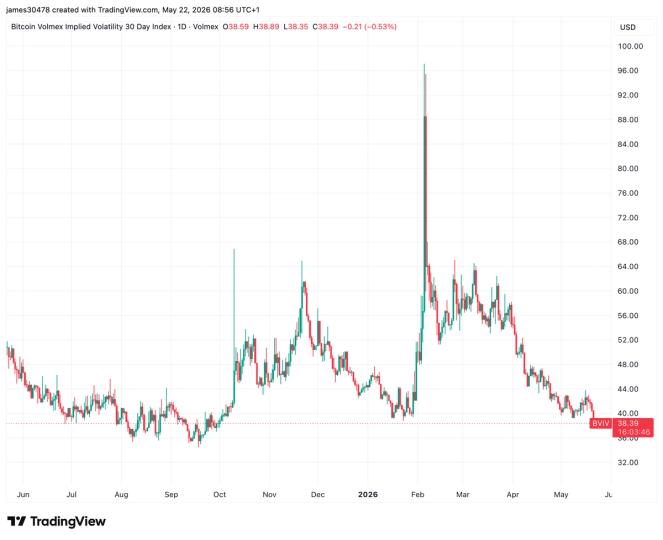
Yeah, you read that right. The annualized 30-day implied volatility index, BVIV as the data geeks call it, has dipped to 38%. That’s the lowest it’s been since way back in October. When this number drops, it’s the market’s way of saying, “Chill out, folks. Not expecting much drama here.”
Why the sudden calm?
Shiliang Tang, a managing partner over at Monarq Asset Management, lays it out pretty clearly. He points to a few things. First, that Iran kerfuffle seems to be winding down – less immediate panic. Second, MicroStrategy (MSTR) is still gobbling up Bitcoin like it’s going out of style, creating this steady demand that acts like a floor. Tang also throws in a curveball: those systematic “call overwriters.” Basically, big players selling options above the current price to make a quick buck. This constant selling pressure keeps a lid on big price moves. It’s all about yield enhancement for these institutional funds.
It’s a classic case of markets not always dancing to the tune of the headlines. While crude oil prices are chugging along under $100, barely a ripple from the geopolitical noise, Bitcoin’s volatility is doing its own thing.
MicroStrategy’s buying spree, by the way, is no joke. They’ve scooped up a staggering 171,238 BTC in 2026 alone. That’s way more than what’s even being mined. It’s a clear sign of sustained institutional demand, which, naturally, tends to smooth things out.
And that’s the other big piece of the puzzle: Bitcoin’s growing up. With ETFs, more asset managers, and even corporations hopping on board, the market is deeper, more liquid. It’s just not the wild west it used to be. This increased adoption is actively tamping down the extreme swings we used to see.
But here’s the kicker for me. We’re seeing this incredible calm in Bitcoin’s volatility even as other risk assets seem to be looking over their shoulders. It’s a fascinating divergence.
“Bitcoin volatility has collapsed, and you can see it clearly in the BVIV levels, which we track closely to monitor market complacency,” said Shiliang Tang, Managing Partner at Monarq Asset Management.
Is this a sign of genuine maturity, or just a temporary lull before the next storm? That’s the million-dollar question, isn’t it?
And what about XRP? While Bitcoin is taking a siesta, XRP-linked funds are apparently attracting some serious cash – around $42 million in the last week. This is happening even as Bitcoin ETFs are seeing outflows. It suggests some traders might be rotating their holdings, looking for the next big thing while trimming exposure from the established giants. Always chasing that next percentage point, aren’t we?
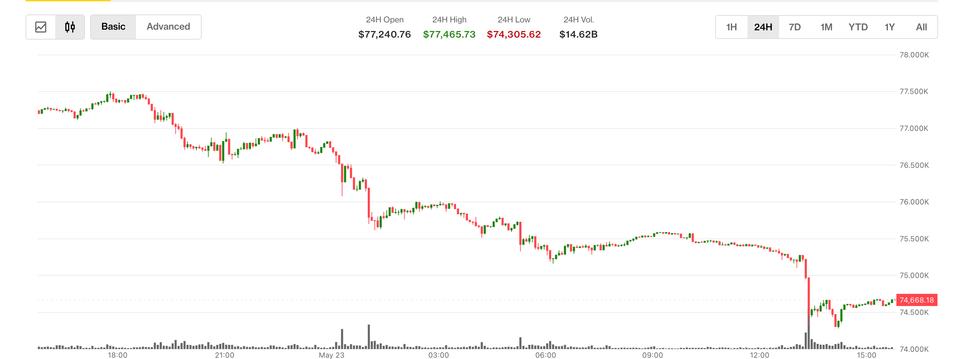
So, we’ve got a Bitcoin that’s behaving less like a speculative meme coin and more like… well, something more stable. It’s trading around $77,000, and the volatility charts are showing a clear downtrend. It makes you wonder who’s actually profiting from this apparent stability.
It’s the options sellers, the institutional buyers, and perhaps even the ETF issuers who are seeing steady inflows. The average retail trader? They’re probably just watching, waiting for the next big move, or perhaps trying to understand why the fireworks they expected never arrived.
Is This Bitcoin Calm Sustainable?
That’s the million-dollar question. The factors Tang mentions – easing geopolitical tensions and systematic options selling – are a powerful mix for suppressing volatility. However, macro risks, while perhaps less acute today, are a persistent feature of the global financial landscape. If inflation rears its head again, or if another unforeseen geopolitical shock hits, the quiet might be shattered pretty quickly. It’s like a calm sea before a hurricane; the underlying forces are still there.
Who’s Really Making Money Here?
Beyond the obvious plays like MicroStrategy holding its bags and earning yield, the real money is likely being made by sophisticated players. Think options market makers who profit from the bid-ask spread, systematic funds that are expertly selling calls to collect premiums, and institutional investors who can absorb smaller price swings. The lower volatility environment is certainly advantageous for those looking to deploy capital with a degree of predictability, but it also means fewer opportunities for speculative traders to profit from massive price swings.
🧬 Related Insights
- Read more: CME Group’s 24/7 Crypto Leap: Avalanche and Sui Join the Frenzy Starting May 29
- Read more: Bitcoin’s $74K Stand: Analysts Watch for Breakout or Breakdown
Frequently Asked Questions
What is implied volatility for Bitcoin? Implied volatility for Bitcoin, or BVIV, is a measure of the market’s expectation of future price swings. It’s derived from the prices of Bitcoin options contracts, reflecting how much traders anticipate Bitcoin’s price will move in the future.
Why has Bitcoin volatility decreased? Bitcoin’s implied volatility has decreased due to factors like easing geopolitical tensions, consistent institutional buying (e.g., from MicroStrategy), and the activity of systematic yield strategies that sell options to earn premiums. Increased adoption and liquidity also contribute to market stability.