Everyone expected the spot Bitcoin ETFs to be a shiny new gateway for institutional money. We were promised inflows, stability, a dignified march towards mainstream adoption. Instead, we’re seeing a quiet stampede for the exits.
This isn’t some minor correction. We’re talking about a single whale, an investor with capital to move markets, offloading a staggering $1.29 billion of BlackRock’s IBIT Bitcoin ETF. And they didn’t do it in the bright lights of a public exchange. Nope. They chose a dark pool – the kind of place where big money goes to trade without tipping their hand to the rest of the world. This trade alone is the biggest of its kind anyone remembers.
The timing is, shall we say, interesting. This gargantuan dump happened smack in the middle of a broader, and frankly embarrassing, exodus from U.S.-listed spot Bitcoin ETFs. We’re not talking nickels and dimes here. On Tuesday alone, these ETFs saw a collective $333 million vanish. Over the past two weeks? A cool $2.26 billion has been pulled. That’s not a trend; that’s a rout.
The Dark Pool Gambit
Alex Thorn from Galaxy, a name worth listening to in this space, flagged the transaction. His assessment? The biggest he’s ever seen. This wasn’t a slow bleed; it was a surgical strike at 10:30 a.m. ET. When a single entity moves that kind of cash in one go, it screams caution. They’re not just trimming the fat; they’re ditching the whole cow. It’s a clear signal of risk aversion, of scaling back exposure before the storm hits – or perhaps, while it’s already brewing.
But here’s the rub, and it’s a big one: a dark pool transaction doesn’t automatically mean net outflows for the ETF itself. Think of it like this: one person’s massive sale is another person’s massive buy. The buyer could be another institution, or several smaller ones, stepping in to absorb that billion-dollar chunk. The net outflow is the final number after all the buying and selling is tallied. So, while this particular whale made a high-conviction move to exit, the market mechanics could have smoothed it over. Yet, the data for IBIT shows net redemptions of $192.44 million for the day. That suggests the momentum was decidedly towards investors saying ‘ta-ta’ to Bitcoin.
Is This a Bitcoin Bear Market Signal?
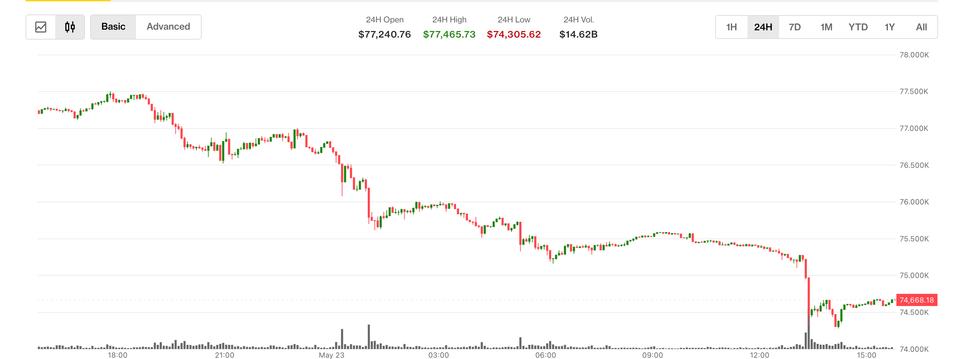
The undeniable trend is that investors are souring on crypto, at least for now. Seven consecutive days of net outflows? That’s the second-longest streak since these ETFs launched. The previous streaks, back in August/September 2024 and February 2025, saw billions vanish. If this current exodus continues, and there’s every reason to believe it might, then Bitcoin’s price is going to feel the pain. We’ve already seen it dip below $77,000 from recent highs above $82,000. It’s not pretty.
And it’s not just Bitcoin. The narrative of Bitcoin as the new digital gold is looking increasingly shaky. The three-month uptrend against gold has officially broken. While billions are flowing out of Bitcoin funds, gold and precious metal ETFs are raking in fresh cash. This signals a renewed appetite for traditional hard assets, a clear bias away from the perceived volatility of crypto. Bitcoin’s momentum as a reliable store of value is weakening, and gold is looking more attractive than it has in ages. This isn’t just a bad week for Bitcoin; it’s a strategic pivot by big money.
The Ghost of Futures Past
This whole situation has a familiar, unsettling echo. Remember the frenzy around the Bitcoin futures ETFs? The initial excitement, the hype, and then… the slow realization that the underlying asset’s price action didn’t always cooperate. Spot ETFs were supposed to be different, a more direct line to the asset itself. But the market is proving that investor sentiment, whether for spot or futures, is a fickle beast. A billion-dollar dark pool trade, followed by days of outflows, isn’t a vote of confidence. It’s a loud, clear message that some very significant players are re-evaluating their crypto positions. The ETFs provided an on-ramp, but it seems, for now, the exit is proving far more popular. This is a critical juncture, and the continued outflows are far more telling than any polished PR statement.
What Does a Dark Pool Trade Mean for Bitcoin Prices?
A dark pool trade is a private transaction between large institutional investors, not visible on public exchanges until after the fact. While this specific trade of $1.29 billion in BlackRock’s IBIT ETF didn’t directly cause a price crash, it signals a significant institutional investor liquidating a large position. When combined with broader outflows from Bitcoin ETFs, it contributes to downward pressure on Bitcoin’s price due to reduced demand and increased selling volume.
Are Bitcoin ETFs Still a Good Investment?
Whether Bitcoin ETFs remain a good investment depends entirely on an individual’s risk tolerance, investment goals, and belief in Bitcoin’s long-term potential. The recent outflows and large dark pool trades suggest caution. While some investors see these dips as buying opportunities, others interpret them as signs of waning institutional interest. It’s crucial to conduct thorough research and consider consulting a financial advisor before making any investment decisions.
Why Did Someone Sell So Much Bitcoin ETF at Once?
The exact reasons behind such a massive sale are unknown, as dark pool trades are private. However, common motivations for large-scale liquidation include portfolio rebalancing, risk management, profit-taking, a change in market outlook, or a need for liquidity. The timing amid broader ETF outflows suggests a broader sentiment shift or a strategic move to exit positions perceived as increasingly risky.