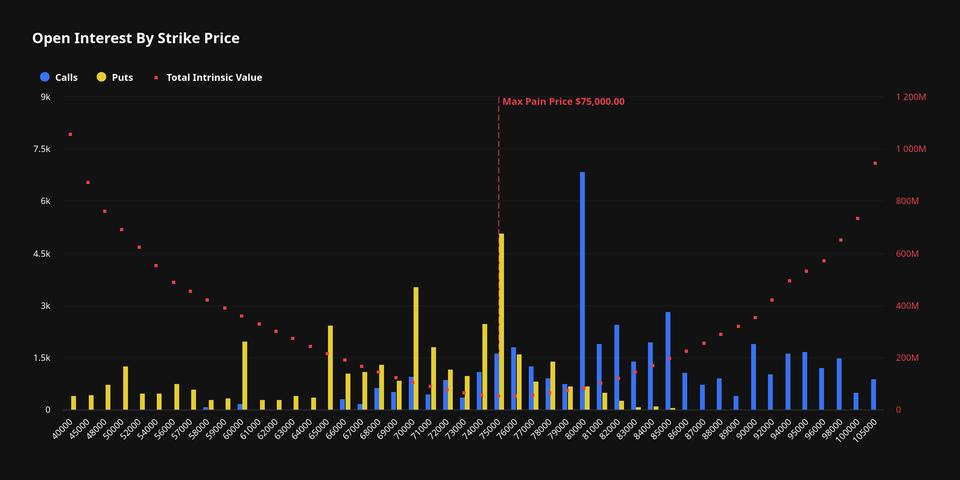
Here’s the thing: the U.S. Securities and Exchange Commission (SEC) just approved Nasdaq’s application to list Bitcoin index options on the Phlx exchange. That’s 0.12% of Bitcoin’s entire circulating supply now potentially subject to new derivative contracts. This isn’t just another crypto listing; it’s a data point screaming regulatory evolution, albeit a hesitant one.
The Numbers Game: 0.12% and $0.01 Increments
The contracts will trade under the ticker QBTC, with a minimum increment of $0.01. That $0.01 figure might seem granular, but it’s the position limit that truly catches the eye: 24,000 contracts per side. The SEC itself noted this equates to roughly 0.12% of Bitcoin’s outstanding supply. Let that sink in. We’re talking about instruments designed to offer exposure, and potentially hedge risk, on a significant chunk of the world’s most prominent cryptocurrency, directly on a traditional exchange.
This is a far cry from the wild west of early crypto trading. It signals a maturing market, one that the traditional financial infrastructure is starting to cautiously embrace. The question isn’t if these products will launch, but when and how they’ll behave under actual market stress.
A Regulatory Tango: SEC vs. CFTC
But hold on a second. Despite the SEC’s green light, these options can’t actually begin trading until the Commodity Futures Trading Commission (CFTC) grants its own exemptive relief. Why the double-check? Because Bitcoin, in the eyes of regulators, is a commodity. And commodities fall squarely under the CFTC’s jurisdiction. It’s a classic jurisdictional tug-of-war, a dance we’ve seen play out before in the fintech space.
CME Group, no stranger to crypto derivatives with its Bitcoin futures options since 2020, even filed a comment letter last October, arguing that these new contracts fall under the CFTC’s exclusive domain. The SEC, however, pointed to Section 717 of the Dodd-Frank Act, asserting that it allows for concurrent jurisdiction between the two bodies when the CFTC provides that crucial exemptive relief. The SEC’s filing was quite clear: “The concept of shared jurisdiction between the Commission and the CFTC is not new,” citing existing examples like mixed swaps and security futures. It’s an argument for pragmatism, for allowing innovation without creating regulatory black holes.
A Shift in Posture: The Atkins Effect?
There’s a palpable shift occurring within the SEC, particularly under Chairman Paul Atkins. We’re seeing a move toward a more crypto-friendly — or at least, less adversarial — regulatory posture. This isn’t just about approving new products; it’s about a willingness to revisit and even drop enforcement cases initiated under prior administrations. Atkins has been vocal about the need for clearer regulatory frameworks that foster innovation rather than stifling it. This Bitcoin options approval aligns with that narrative. It suggests a desire to bring digital assets into a more defined, regulated space, rather than pushing them further into the shadows.
This move by the SEC could be a precursor to even more significant developments. The agency is reportedly preparing an “innovation exemption” that would enable the tokenized trading of public company shares on decentralized crypto platforms, even without direct company consent. If that materializes, we’re looking at a fundamental reshaping of how securities can be traded and accessed.
The Critical Question: Is This Enough?
Here’s my take: While the approval of Bitcoin index options is a win for market development and a nod to increasing institutional comfort with crypto, it’s not the end of the regulatory journey. The reliance on CFTC relief means the path isn’t entirely clear. We’re still operating under a fragmented regulatory structure, which can create uncertainty and hinder the very innovation regulators claim to want. This isn’t a revolutionary overhaul, but a measured step. It’s progress, sure, but the real test will be whether this leads to broader clarity for the entire digital asset ecosystem, or if it’s just another specific carve-out in a perpetually complex landscape. The market’s reaction to QBTC, and the subsequent CFTC decision, will provide the next set of crucial data points.
Why Does This Matter for Crypto Investors?
The listing of Bitcoin options on Nasdaq is more than just a ticker symbol. It’s about increased accessibility and potentially enhanced liquidity for institutional players. These options can be used for hedging existing Bitcoin positions or for speculative bets on price movements, all within the regulated framework of a major exchange. For individual investors, this could indirectly lead to more stable markets and better price discovery as institutional capital flows in through these regulated channels. It’s an evolution from the purely speculative retail-driven market to one increasingly influenced by sophisticated financial instruments. The key takeaway is that the infrastructure for more mature financial strategies around Bitcoin is being built, brick by regulatory brick.
Will This Lead to Higher Bitcoin Prices?
It’s a natural question, but direct causation is tricky. The approval itself might trigger a short-term positive sentiment, but sustained price impact hinges on several factors. The actual trading volume of these options, the net flow of capital into Bitcoin via these instruments, and the broader macroeconomic environment will all play significant roles. If these options become widely adopted for hedging and as a tool for institutional capital deployment, it could indeed contribute to upward price pressure by increasing demand and reducing volatility. However, they can also be used for bearish bets, so the net effect on price is far from guaranteed and likely complex, involving both buying and selling pressure.
🧬 Related Insights
- Read more: Bitcoin’s $65K Base: Is the ‘Paper Hand’ Washout Real?
- Read more: AI Agents Invade Crypto: Cambrian’s Ethereum Gambit
Frequently Asked Questions
What does the SEC approval of Bitcoin options mean for the crypto market?
It signifies increased regulatory acceptance of crypto derivatives and opens new avenues for institutional investors to gain exposure to Bitcoin within a regulated exchange environment. This could lead to greater market maturity and potentially improved liquidity.
Why is CFTC approval still needed if the SEC approved it?
Because Bitcoin is classified as a commodity, it falls under the CFTC’s jurisdiction for certain derivative products. The SEC and CFTC have a shared jurisdiction framework, and CFTC approval is necessary for these specific types of contracts to trade.
How will these Bitcoin options differ from existing Bitcoin futures?
Options provide the right, but not the obligation, to buy or sell an asset at a specific price, offering more flexibility for hedging and strategies compared to futures, which obligate participants to buy or sell. The smaller increment ($0.01) and specific position limits also define their market behavior.