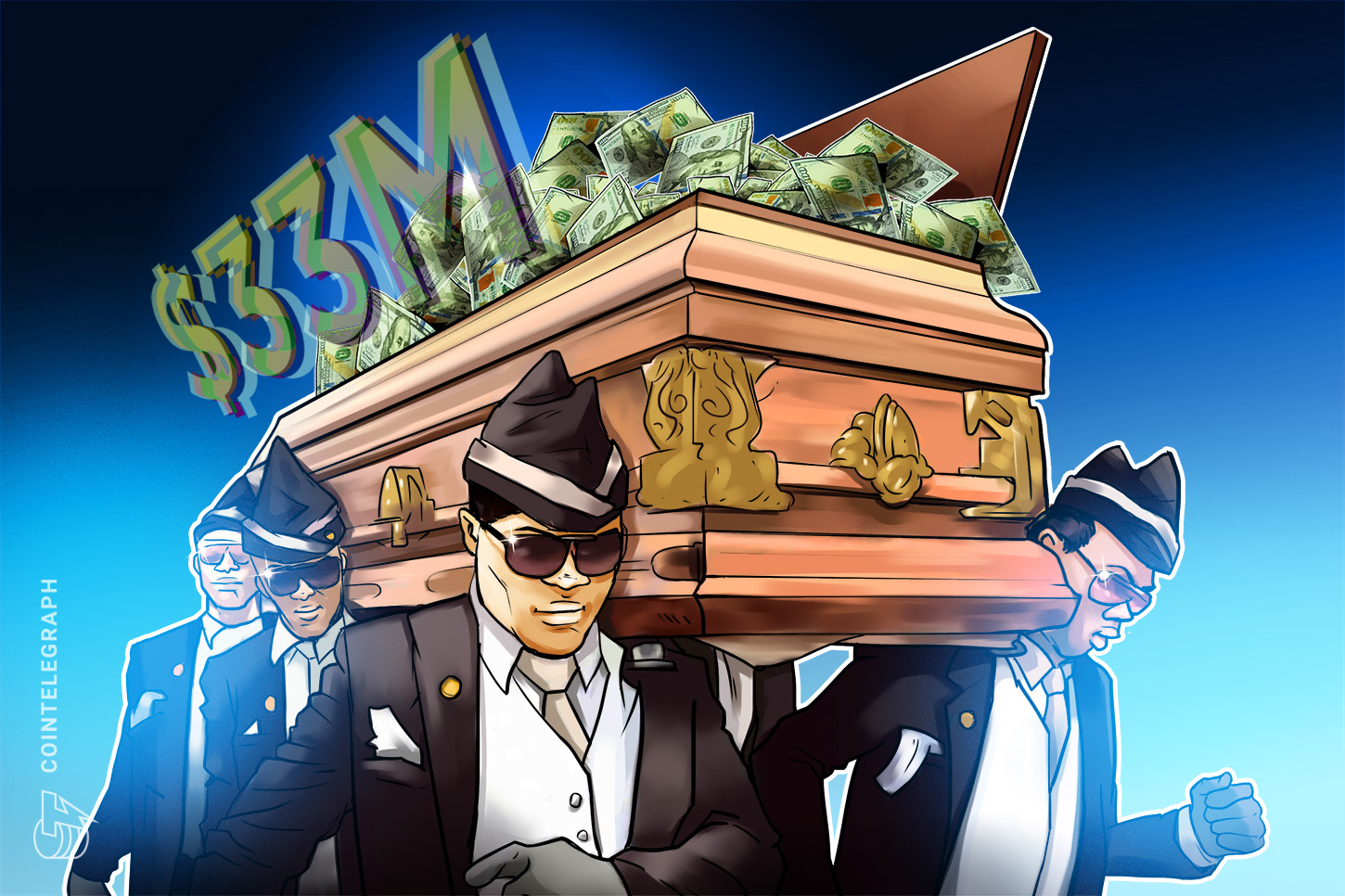
A $33 million unrealized loss. For a funeral company. It’s the kind of headline that makes you do a double-take, not because the number is astronomical by Wall Street standards, but because of who is holding the bag. Bumo Sarang, a funeral services provider in South Korea, has found itself on the wrong side of a use Ethereum ETF trade, a stark illustration of how deeply retail investment has permeated the often-opaque world of crypto derivatives.
This isn’t just about one firm taking a bath. This is about the architectural shift in how capital flows, how retail investors are being nudged—or perhaps pushed—into increasingly complex financial products, and the sheer, unadulterated churn of money chasing returns in a volatile market. We’re talking about traditional businesses, not crypto-native entities, dipping their toes into use positions on digital assets that are, for all intents and purposes, still finding their footing in the broader financial ecosystem.
Samson Mow, CEO of JAN3, pointed out last October that some $6 billion of Korean retail capital was propping up Ethereum treasury companies, adding a chilling observation: “some of those retail buyers didn’t understand the risks of investing in Ether.” That sentiment feels amplified here. Bumo Sarang’s predicament isn’t an isolated incident but a symptom of a larger phenomenon—the migration of significant retail capital from traditional assets, like tech stocks, into the potentially more lucrative but far riskier cryptocurrency space, often facilitated by products that amplify both gains and losses.
The company’s spokesperson offered a classic line: a “short-term unrealized loss due to global market volatility,” deemed “sufficiently controllable within the company’s financial buffer.” It’s the corporate equivalent of “it’s just a flesh wound.” But let’s unpack that. use ETFs, by their very design, are meant for short-term trading. They use derivatives to amplify daily returns, meaning that a small daily price movement can result in significant gains or losses. When Ether’s price dropped over 28% year-to-date in 2026, and was trading above $2,118 at the time of writing, a use position would have seen its value plummet, not just by 28%, but by a multiple of that.
This isn’t a simple buy-and-hold strategy. This is active, use speculation. And for a funeral company, whose core business is—well, helping people through one of life’s most somber and predictable transitions—it raises profound questions about risk management and diversification. Are we seeing a trend of non-financial companies using their balance sheets as speculative playgrounds, chasing the digital gold rush with tools designed for seasoned traders? The architectural shift here is the blurring of lines between core business operations and speculative investment, a move that can feel less like innovation and more like a high-stakes gamble.
And it’s not just Bumo Sarang. Bitmine’s stock price also fell nearly 40% during the same period. Its chairman, Tom Lee, described Ether’s drop below $2,200 as an “attractive opportunity” to buy more Ether. This suggests a certain bullishness among these entities, even in the face of significant downturns. But the core issue remains: the structural difference between holding a spot asset and engaging in use derivatives is night and day. The latter demands constant monitoring, deep market understanding, and a tolerance for extreme volatility that a funeral company, by its very nature, isn’t typically equipped for.
Here’s the thing: the allure of astronomical returns in crypto is powerful. It pulls in retail investors who might be new to the game, and it seems to have pulled in traditional businesses looking for an edge. But use ETFs are a complex beast. They’re not designed for passive accumulation or long-term holds. Their value decays over time due to compounding effects and management fees, even if the underlying asset price stays flat. When you add in sharp market downturns, the losses can be swift and brutal.
The core of the problem lies in the commoditization of complex financial instruments and their accessibility to entities—and individuals—who may not fully grasp their inherent risks. The architecture of finance is changing, becoming more accessible, yes, but also more perilous for the unwary. Bumo Sarang’s $33 million unrealized loss isn’t just a financial setback; it’s a neon sign flashing a warning about the increasing, and often ill-advised, intersection of traditional businesses and high-risk digital asset derivatives.
The Speculative Pull of use ETH ETFs
Leveraged exchange-traded funds (ETFs) are built to amplify the daily returns of an underlying asset, in this case, Ethereum (ETH). A 2x use ETH ETF, for instance, aims to deliver twice the daily percentage change of ETH. This amplification comes with significant risks, especially in volatile markets. For Bumo Sarang, a funeral services company, investing in such a product signals a willingness to engage in high-risk, short-term speculation, a departure from typical corporate treasury management. The architectural shift here is the use of complex derivatives by entities not traditionally involved in such trading, driven by the pursuit of outsized returns in a bull market, which can turn into catastrophic losses when the market turns south.
Why Did a Funeral Company Invest in use ETH ETFs?
This is the million-dollar question—or in Bumo Sarang’s case, the $33 million question. The primary driver is likely the immense profitability demonstrated by cryptocurrency markets in recent years. With traditional businesses facing margin pressures and seeking diversification, the exponential growth potential of digital assets, especially with use, presents a tempting opportunity. South Korean retail investors, in particular, have shown a strong inclination towards such investments, as noted by Samson Mow. This suggests a broader trend of capital flowing into crypto, potentially from traditional sectors, seeking enhanced returns. The risk, however, is that entities like Bumo Sarang may lack the specialized expertise and risk management frameworks required to navigate the complex landscape of use crypto derivatives, leading to substantial unrealized losses when market conditions shift.
What Are the Long-Term Implications?
The implications of Bumo Sarang’s situation are twofold. Firstly, it highlights the growing interconnectedness between traditional finance and the crypto market, and the potential for contagion when crypto assets experience significant downturns. Secondly, it underscores the need for strong regulatory oversight and investor education, especially concerning complex financial products. For businesses, it’s a stark reminder to focus on core competencies and implement rigorous risk management policies before venturing into highly speculative markets. The architectural shift towards democratizing access to sophisticated financial instruments must be balanced with ensuring that users, be they individuals or corporations, possess the understanding and capacity to manage the associated risks effectively. Without this balance, we’ll continue to see more headlines like this, not as isolated incidents, but as predictable outcomes of unchecked speculative fervor.
A spokesperson for Bumo Sarang told the local outlet that the company is only facing a “short-term unrealized loss due to global market volatility,” which remains “sufficiently controllable within the company’s financial buffer.”