And then, silence. That’s the sound of retail Bitcoin demand, down a staggering 73% over 30 days, according to new data from CryptoQuant. Monthly retail BTC inflows on Binance, the bellwether exchange for smaller players, have dwindled to an average of just 314 BTC. To put that into context, that figure hovered near 1,800 BTC during the bleak 2022 bear market and was around 1,200 BTC even during Bitcoin’s March 2024 local peak near $75,000. We’re talking about a level of retail apathy not seen since the preceding cycles, which saw inflows topping 5,400 BTC in 2018 and 2,600 BTC in 2021.
This isn’t just a blip; it’s a seismic shift. One prevailing theory, voiced by analyst Darkfost, suggests a migration away from direct BTC holdings on exchanges toward the newly minted spot Bitcoin ETFs. It’s a plausible explanation: the allure of a regulated, albeit passive, investment vehicle might be drawing away the more cautious retail crowd that once navigated the choppy waters of direct exchange ownership.
Retail demand growth itself is also showing a distinct chill. The 30-day change in retail investor demand has shrunk to a mere 3.12%, a sharp comedown from 7.39% last week. That earlier reading, incidentally, was the strongest retail demand expansion since August 2025, when Bitcoin was flirting with $115,000. The subsequent decline signals a weakening spot market participation after a fleeting flirtation with increased buying.
Futures Bloodbath Fuels the Downturn
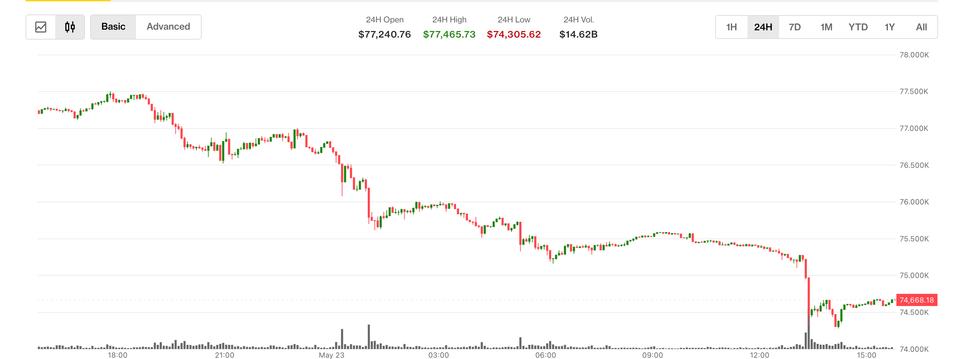
While retail inflows dry up, the futures market is painting a grim picture. Crypto analyst Amr Taha identified two colossal spikes in Bitcoin taker sell volume during the recent price slide. The first clocked in at a cool $1.5 billion on May 15, followed by another above $1.1 billion as Bitcoin tumbled below $77,000. This isn’t just a market correction; it’s a wholesale liquidation event.
Market observer Crazzyblockk highlights a critical missing piece for any sustainable Bitcoin recovery: balanced spot demand. Previous rallies in October 2024, November 2024, and May 2025 all featured synchronized upswings in both spot and futures demand. Those periods saw spot demand ranging from +97,000 BTC to +190,000 BTC, marching in lockstep with futures expansion. This time, however, the script has been dramatically rewritten.
BTC futures demand remained positive at +193,000 BTC over 30 days, while spot demand remained negative at -28,000 BTC and stayed below zero for 65 consecutive days. The total 30-day demand growth also fell from 232,000 BTC in early May to 62,000 BTC by May 16, recording a 73% decline.
The divergence is stark and, frankly, worrying. While futures traders are still showing some appetite, the fundamental bedrock of spot buying—where actual Bitcoin is acquired—has evaporated. This imbalance suggests that much of the recent activity is speculative positioning, easily unwound when sentiment shifts, rather than conviction-driven accumulation.
Binance’s Shifting Dominance
Adding another layer to this evolving market dynamic, Crazzyblockk also pointed to a sharp shift in Binance’s futures dominance last month. For a considerable period, from October 2024 to March 2026, Binance held a commanding 40%-44% share of global USDT-margined futures volume. That dominance has now fractured. In May 2026, Binance’s share plummeted to 21.1%, while OKX surged to 26.3%. This is the first instance of exchange leadership flipping during this cycle, indicating a potential reallocation of market-making and trading capital across platforms. Whether this is a strategic move by traders seeking different liquidity pools or a symptom of broader exchange-specific pressures remains to be seen.
Looking at the data, the narrative is clear: retail is out, futures selling is rampant, and spot demand is in the doldrums. While the ETFs might be siphoning off some retail interest, the sheer scale of the futures liquidation, coupled with the negative spot demand, paints a picture of a market vulnerable to further downside. The bulls have certainly lost their footing; the question is whether they can find solid ground again before the bears dig in for a prolonged stay.
Why is Retail Demand for Bitcoin Falling So Sharply?
The sharp 73% decline in retail Bitcoin demand is likely a confluence of factors. The rise of spot Bitcoin ETFs offers a more accessible, regulated investment avenue, potentially drawing retail capital away from direct exchange holdings. Concurrently, a significant surge in Bitcoin futures selling, exceeding $2 billion, has created a bearish sentiment that deters smaller investors from entering or expanding their positions in the volatile spot market.
Is This a Sign of a New Bitcoin Bear Market?
While a definitive call of a new bear market is premature, the data presents significant bearish signals. The drastic drop in retail inflows, combined with sustained negative spot demand for Bitcoin and massive futures liquidations, indicates a weakening market structure. Previous rallies were supported by balanced spot and futures demand; this latest recovery has lacked that fundamental strength, suggesting a higher probability of continued price depreciation if these trends persist.
What is the Role of Spot Bitcoin ETFs in This Shift?
Spot Bitcoin ETFs are widely believed to be playing a role in drawing retail investors away from direct Bitcoin holdings on exchanges. These ETFs provide a familiar, regulated investment product for individuals who might be hesitant to manage private keys or navigate the complexities of cryptocurrency exchanges. This shift diverts capital that might have previously flowed directly into BTC on platforms like Binance into a more institutional-friendly vehicle, impacting direct retail on-chain metrics.
🧬 Related Insights
- Read more: Grayscale’s Altcoin Bet: Resilience Amid Rockets and Rate Hikes
- Read more: Bitcoin Miners Are Now Energy Landlords: Why Soluna’s $53M Wind Farm Deal Changes Everything
Frequently Asked Questions
What does the 73% drop in retail Bitcoin demand mean? It signifies a significant decrease in buying activity from smaller, individual investors on exchanges, potentially indicating a loss of confidence or a shift in investment strategies, possibly towards ETFs.
Are the Bitcoin bears back based on this data? The data presents strong bearish signals, including plummeting retail demand and high futures selling, suggesting that the market is currently under significant downward pressure, increasing the likelihood of a bear trend.
What is spot demand vs. futures demand for Bitcoin? Spot demand refers to the actual buying and selling of Bitcoin for immediate delivery on exchanges, representing direct ownership. Futures demand relates to contracts that bet on the future price of Bitcoin, without the immediate exchange of the underlying asset.