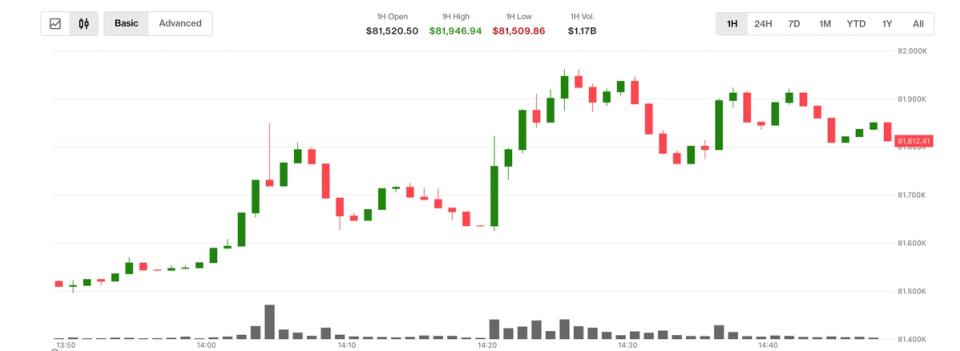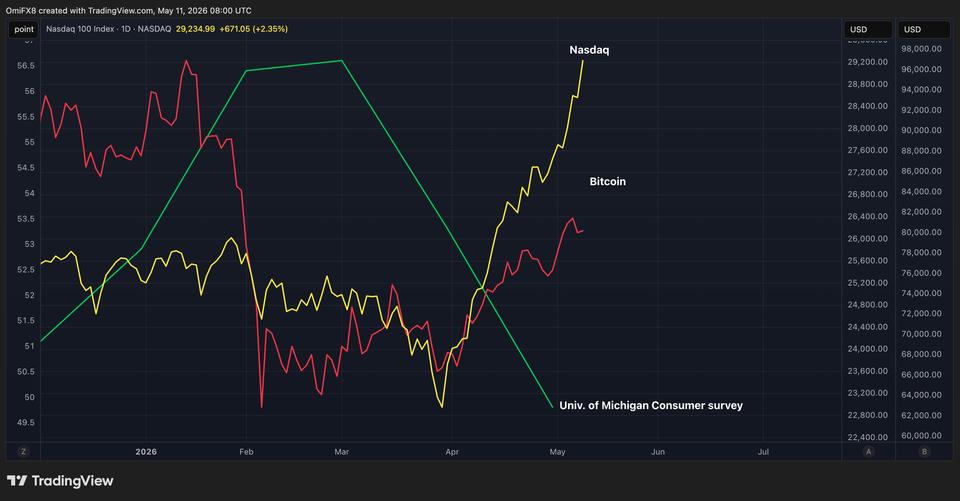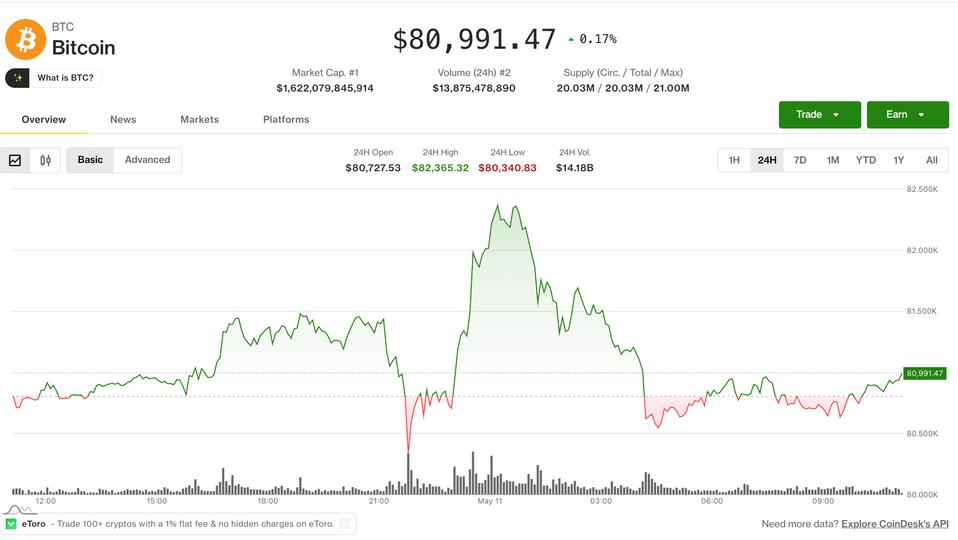
Just yesterday, Bitcoin, that volatile digital darling, flirted with $82,400. A breath later, it was slipping below $81,000. This isn’t just noise; it’s the sound of markets reacting. We’re talking about a seismic shift, a whiplash that coincided with the weekly open of Bitcoin futures on the CME and U.S. equity markets. It’s the kind of price action that makes you stop scrolling, grab your coffee, and ask: what just happened?
Here’s the thing: when the Chicago Mercantile Exchange opens its doors for Bitcoin futures trading, it’s like hitting the reset button. A phenomenon known as the “CME gap” often occurs. This happens when the price at the Friday close and the Sunday open are miles apart, creating an arbitrage opportunity — or at least a sudden rush to reposition. But this week, that mechanical dance was underscored by a much more primal fear: geopolitical instability. Tensions out of Iran, specifically U.S. President Trump’s characterization of Iran’s response to a peace proposal as “totally unacceptable,” sent shockwaves through global markets.
The Interplay of Fear and Futures
This wasn’t just about crypto. Oil prices spiked. The U.S. dollar strengthened. And assets traditionally seen as riskier — like Bitcoin and the broader crypto market — predictably took a hit. The CoinDesk 100, a broad measure of the digital asset market, shed 1.5%, with the more Bitcoin-centric CoinDesk 5 dipping 0.6%. It’s a classic risk-off environment, where investors flee to perceived safety, leaving speculative assets behind. But the story is more nuanced than just flight.
Let’s talk derivatives. For four days straight, the market-wide crypto futures open interest (OI) has hovered just above $130 billion. This sticky number signals a certain stasis, a lack of fresh capital pouring in to fuel dramatic moves. Centralized exchanges have seen over $400 million in use futures positions liquidated, with the majority of those being short bets. That tells us a significant chunk of traders were betting on a downturn, only to be caught off guard by that initial surge.
But not all altcoins are being swept away by the Bitcoin tide. SUI, for instance, is bucking the trend. Its OI has shot up by an impressive 29%, mirroring a double-digit price increase. This surge, combined with positive funding rates and a healthy OI-adjusted cumulative volume delta, strongly suggests growing demand for bullish exposure specifically to SUI. Dogecoin (DOGE) and Hedera Hashgraph (HBAR) are also showing gains in OI. Meanwhile, the stalwarts, Bitcoin (BTC) and Ethereum (ETH), are showing more muted activity in their futures OI, suggesting traders are either waiting for a clearer signal or are comfortable with their current positioning.
On the flip side, the privacy-focused Zcash (ZEC) has seen its futures OI decline by 6%, a clear indication of capital moving out. Despite key U.S. economic data like CPI and PPI releases looming, the market remains surprisingly calm, at least in terms of implied volatility. Bitcoin’s 30-day implied volatility index is sitting near three-month lows. This suggests that while short-term price swings are happening, the expectation of future volatility isn’t quite there yet. It’s like seeing a cat poised to pounce, but it’s still frozen, contemplating its leap.
On Deribit, the options market tells a story of speculative bets. Bitcoin calls at strikes ranging from $81,000 to $86,000 are dominating volume. Call options are inherently bullish plays, meaning traders are betting on price increases. Curiously, though, block flows are showing Bitcoin long call condors. This is a more complex strategy designed to profit from low volatility and minimal price movement. It’s a strategy that aims to capture theta decay (the erosion of an option’s value over time) when the underlying asset stays within a certain range. So, while some are betting on upward momentum, others are positioning for sideways action. It’s a house divided, or perhaps, a market hedging its bets.
Why Are We Seeing Such Divergent Strategies?
This isn’t just about geopolitical headlines. There’s a deeper architectural shift happening, particularly in the realm of AI integration within the crypto space. Take Venice’s VVV token, for example. It has more than doubled in the past month, driven by a potent mix of emissions cuts, token burns, new product launches, and, crucially, the burgeoning demand for AI-related applications. Venice has implemented aggressive token burn mechanisms tied to its subscriptions, and it’s systematically reducing its annual token emissions. This supply-side management is crucial for token value appreciation.
What’s really accelerating the VVV rally, however, is its adoption as a core infrastructure component. StrikeRobot, a developer of AI software for robotics, has tapped Venice as a primary inference API backend for its products. This signifies a move beyond speculative trading towards real-world utility, where blockchain infrastructure underpins advanced AI operations. Jesse Proudman, a co-founder, noted that subscription and credit purchases hit a record, surpassing previous highs by 10%. Despite this surge, VVV is still trading below its January 2025 all-time high, having experienced a significant dip post-launch due to insider-trading concerns. Yet, the current momentum suggests a potential re-evaluation of its value.
And it’s not just VVV. The broader trend among Bitcoin mining companies is a clear pivot towards AI and high-performance computing (HPC) infrastructure. MARA, for instance, is expected to report significant mark-to-market losses for Q1 due to Bitcoin’s price decline during the quarter. However, investor focus has firmly shifted to the company’s AI and HPC expansion plans. The mining industry, historically tethered to the price of Bitcoin, is actively seeking diversified revenue streams. This strategic recalibration is perhaps the most significant undercurrent influencing the market’s long-term trajectory, as it promises to unlock new value propositions beyond mere block rewards.
The broader bitcoin mining industry continues shifting toward AI driven revenue models.
This isn’t just a fleeting trend; it’s a fundamental architectural shift. Companies are recognizing that the immense computational power they possess, honed for Bitcoin mining, can be repurposed and monetized for AI workloads. This diversification is key to long-term survival and growth in an increasingly competitive and volatile digital asset landscape. The question isn’t if these companies will integrate AI, but how deeply and how successfully they can navigate this complex transition. The current market volatility is a ripple on the surface; the real seismic activity is happening beneath, in the strategic retooling of digital infrastructure.
🧬 Related Insights
- Read more: Bitcoin’s Unexpected Surge: Geopolitics or Senate Votes?
- Read more: [Data] Hyperscalers Split AI Agent Market: Who’s Winning Where
Frequently Asked Questions
What does the ‘CME gap’ mean for Bitcoin traders?
A CME gap occurs when the Bitcoin futures price opens significantly higher or lower than its previous Friday closing price. This can create opportunities for arbitrageurs or trigger rapid price adjustments as traders try to fill the gap, often leading to increased volatility.
How are geopolitical tensions impacting Bitcoin?
Geopolitical events, like those involving Iran, tend to increase global economic uncertainty. In such times, investors often move capital away from riskier assets like Bitcoin towards safer havens like gold or the U.S. dollar, leading to price declines in crypto markets.
Is the shift to AI changing the Bitcoin mining industry?
Yes. Many Bitcoin mining companies are actively exploring and investing in AI and high-performance computing infrastructure. They aim to diversify their revenue streams beyond Bitcoin mining by leveraging their computational resources for AI-related tasks, signaling a significant strategic shift in the industry.