The narrative for the AI infrastructure buildout has been relentlessly focused on the silicon – the GPUs, the custom AI chips, the sheer processing power. We pictured sprawling server farms humming with computational might, driven by innovation and fueled by venture capital. But here’s the thing: that humming requires electricity. A lot of it. And that’s where the established script takes a hard left turn, landing us squarely in the dusty, power-hungry world of Bitcoin miners.
Just as Google and Blackstone reportedly ink a deal to form a new AI cloud venture, backed by a cool $5 billion from Blackstone, the real constraints on this AI explosion are coming into sharper focus. It’s not capital. It’s not even proprietary chip design. It’s power. Raw, grid-connected, shovel-ready electricity.
And who, precisely, has been quietly stockpiling gigawatts of planned power capacity? The very same entities often derided for their energy consumption: Bitcoin miners. According to a new analysis from Bernstein, these digital gold diggers collectively control over 27 gigawatts of planned power capacity in the United States. That’s not pocket change; that’s the kind of scale that makes hyperscalers sit up and take notice.
The Gridlock of Watts
Think about it. Building a new data center, especially one capable of housing the AI behemoths of today and tomorrow, isn’t just about finding a plot of land and plugging in servers. The lead times for grid-connected power infrastructure can stretch for years, often four or more, in many U.S. states. This gridlock has turned energy procurement into the primary bottleneck, forcing giants and nimble startups alike to scout for solutions beyond the traditional path.
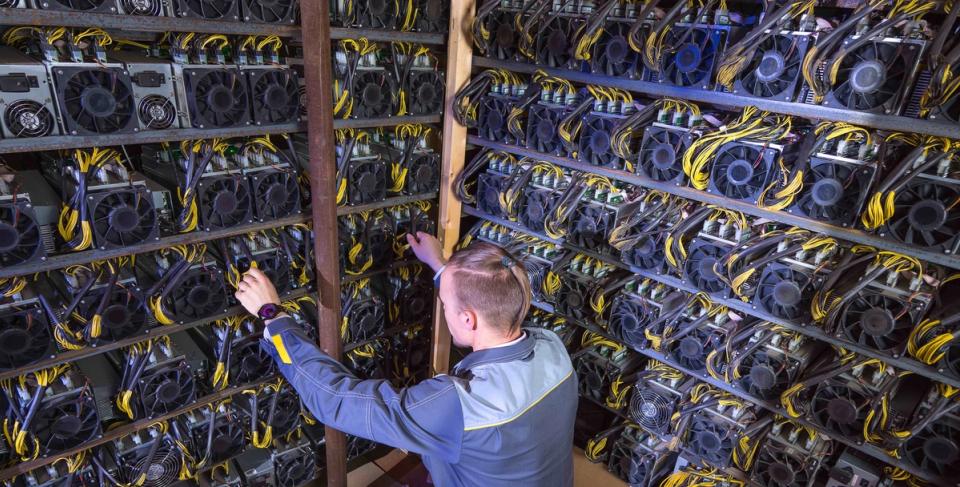
This is where Bitcoin miners, who by their very nature have always been obsessed with securing cheap, reliable power for their energy-intensive operations, have found an unexpected pivot. They’re not just mining Bitcoin anymore. They’re repurposing their entire operational playbook – and vast power reserves – for the AI gold rush.
Bernstein highlights that the industry has already announced over $90 billion in AI-related contracts, securing 3.7 gigawatts of that coveted capacity. Roughly a third of those deals are direct pacts with the major hyperscalers like Google and Microsoft. The rest? They’re with the burgeoning “neoclouds” – the independent AI computing providers that companies like Google and Blackstone are now either partnering with or looking to directly compete with.
“The sprawling network of Bitcoin mining companies that have quietly accumulated more than 27 gigawatts of planned power capacity across the United States.”
We’re seeing major players like IREN lock in multi-billion dollar deals with Nvidia, which includes equity commitments tied to GPU deployment. Riot Platforms has an AI colocation agreement with AMD, and Core Scientific and HUT 8 are also signing on with significant cloud customers. These aren’t small, speculative bets; these are strategic alliances that underscore a fundamental shift.
The Miner’s Gambit: From Speculation to Infrastructure
This dynamic positions Bitcoin miners in an enviable, if somewhat accidental, strategic lock. Whether the big players decide to build their own AI cloud operations from scratch or continue to rely on third-party providers, the fundamental requirement for strong, grid-connected power remains. And for now, the miners hold a significant portion of that key resource. They’ve effectively transformed from being solely Bitcoin miners to becoming critical infrastructure suppliers for the most in-demand technology on the planet.
It’s a fascinating echo of history. In the early days of the internet, fiber optic cable providers, initially built out for telecom, suddenly found themselves indispensable to the burgeoning web. Now, it’s the electricity infrastructure developed by Bitcoin miners that’s becoming the unexpected backbone of AI. The capital-intensive buildouts that were once aimed at securing a competitive edge in digital currency mining are now providing the foundational capacity for a new technological era.
Bernstein has taken note, placing outperform ratings on IREN, Riot Platforms, CleanSpark, and Core Scientific, with market-perform on MARA Holdings. Their price targets suggest a belief that this power-brokering position is more than a fleeting trend.
My Unique Insight: The real game-changer here isn’t just that miners have power; it’s that they’ve built the infrastructure for independent power generation and grid-tie capabilities at a scale most traditional data center developers couldn’t dream of acquiring in the current regulatory and construction climate. They’ve navigated the complex permitting and grid-interconnection processes for their own benefit, and now those hard-won pathways are precisely what AI companies desperately need. It’s a proof to their resilience and adaptability, turning what some viewed as a liability (energy consumption) into a strategic asset.
Why Does This Matter for AI Companies?
The immediate implication for AI companies and hyperscalers is clear: negotiating power contracts with miners will become a primary strategic imperative. This isn’t just about securing kilowatt-hours; it’s about long-term capacity planning, deal structure (including equity stakes, as seen with Nvidia), and de-risking the immense capital expenditure required for AI hardware.
It also injects a new layer of complexity into the competitive landscape. While Nvidia supplies the brains and the hyperscalers provide the capital and software stacks, the miners are providing the vital, often overlooked, circulatory system. Their use could influence pricing, contract terms, and even the pace of AI development itself.
The Future of AI Infrastructure
This isn’t to say that GPU manufacturing or chip design is any less important. Far from it. But the race to build the AI infrastructure of tomorrow is proving to be a multi-faceted competition. The players who can secure and deploy reliable, massive amounts of electricity will hold a distinct advantage.
So, next time you hear about the AI revolution, remember the hum of the servers is only possible because of the roar of the power grid. And it turns out, the operators of that grid, in this new context, might just be the ones holding the keys to the kingdom.
🧬 Related Insights
- Read more: Coinbase’s Armstrong Flips on Clarity Act: The Crypto Reg Pivot We’ve Been Waiting For
- Read more: OKX and HashKey Pour $380M into Vietnam’s Crypto Playpen – Hanoi’s Strings Attached
Frequently Asked Questions
What does Bernstein’s analysis mean for Bitcoin miners?
It means they’ve shifted from being primarily Bitcoin producers to critical infrastructure providers for the burgeoning AI industry. This can unlock new revenue streams, strategic partnerships, and potentially higher valuations.
Will this impact Bitcoin’s price?
While the primary driver for miners is now AI infrastructure, the increased demand for their power capacity and operational expertise could indirectly benefit the Bitcoin ecosystem by ensuring continued investment and innovation in mining operations. However, the direct correlation to Bitcoin’s price is complex and influenced by many other factors.
Are Bitcoin miners the only source of AI power?
No, but they represent a significant and rapidly accessible source of planned and developed power capacity that is currently constrained in traditional data center development. Hyperscalers are also investing heavily in their own power generation and grid connections.