Here’s a stat to chew on: 95% of merchants report seeing traffic from AI agents on their sites. Ninety-five percent! Yet, a scant 20% have bothered to make their product catalogs machine-readable. That’s according to a PayPal survey, and frankly, it’s exactly the kind of glacial pace from the business world that makes you want to bang your head against a wall. It’s like showing up to a Formula 1 race with a unicycle.
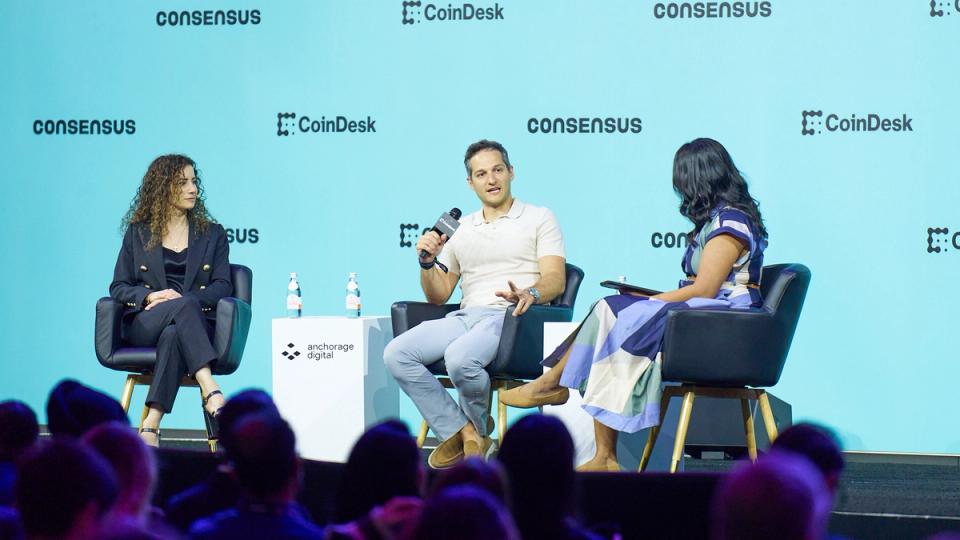
This is the backdrop for a rather bold pronouncement from the halls of Google Cloud and PayPal, delivered at Consensus Miami: agentic commerce – you know, the future where AI does your shopping for you – is going to run on crypto rails. Why? Because, apparently, AI agents can’t get a traditional bank account. This isn’t a minor inconvenience; it’s framed as a fundamental structural barrier. Richard Widmann, global head of Web3 strategy at Google Cloud, put it bluntly: ‘An agent cannot get a bank account. It’s not hard, it just is impossible.’
So, what’s the workaround? Crypto. Widmann described it as a ‘fantastic machine readable interface for payments.’ It’s an odd pitch, frankly, to position something so often associated with speculation and volatility as the bedrock of smoothly, automated commerce. But Google’s apparently all-in, launching something called the Agentic Payments Protocol (AP2). It’s an open protocol, donated to the FIDO Foundation, and already boasts over 120 partners, including our friends at PayPal. Think of it as another attempt to build the plumbing for the internet’s next act, much like the move to open standards for web browsing years ago.
Why the Rush to Crypto for AI Payments?
May Zabaneh, PayPal’s senior vice president for crypto, echoed the sentiment, framing AI agents as the next evolutionary step after offline, online, and mobile commerce. PayPal’s own stablecoin, PYUSD, is apparently positioned as the ‘natural programmable layer for payments.’ It’s all very neat and tidy in their presentations. Globalization, AI-native experiences, tokenized assets – it’s a symphony of buzzwords promising a brighter, more automated future. But behind the shiny veneer, the reality is that most merchants are still fumbling with how to even make their inventory understandable to a bot.
The immediate implications are clear: if AI agents are going to execute transactions, and they can’t interface with the entrenched banking system, then an alternative is needed. And that alternative, according to these tech giants, is the permissionless, programmatic nature of blockchain. It’s a compelling argument, in theory. A world where your AI assistant can autonomously negotiate prices, place orders, and manage payments without human intervention is, admittedly, futuristic. But the devil, as always, is in the execution and adoption.
The liability question looms large, of course. If an AI agent messes up and buys your entire Amazon cart in dogecoin, who’s on the hook? Zabaneh acknowledges this, calling it ‘something that we have to think through as an industry.’ Widmann’s proposed solution? Multi-party custody. The idea is that an agent shouldn’t have sole control over funds. Instead, it would hold a shard of a private key, requiring other parties to sign off on transactions. This adds a layer of security and accountability, preventing rogue AI shopping sprees, presumably.
But let’s be honest, this whole pitch hinges on a significant assumption: that the broader economic infrastructure will pivot to accommodate these crypto rails. We’re talking about convincing not just tech companies, but potentially every retailer, service provider, and consumer to embrace a system that still carries baggage. It’s a massive undertaking. The historical parallel here isn’t just the shift to online shopping; it’s the far messier, slower, and often reluctant adoption of entirely new financial technologies that we’ve witnessed throughout history.
What keeps Widmann up at night? How to ‘onboard agents into all of the existing capital markets and infrastructure plumbing that powers payments and trading today.’ That’s the million-dollar – or perhaps trillion-dollar – question. For Zabaneh, it’s trust. Though, on a personal level, she ‘can’t wait for agentic to help make my life easier.’ It’s that classic dichotomy: the industry expert wrestling with systemic challenges, and the human yearning for the convenience that technology promises.
“An agent cannot get a bank account. It’s not hard, it just is impossible.”
This isn’t just about building a new payment system; it’s about convincing an entire ecosystem to rebuild its foundations. The technology might be ready to enable agentic commerce on crypto rails, but is the world ready for it? The 95% of merchants seeing AI traffic but not acting on it suggest the answer, for now, is a resounding ‘not yet.’ And in the meantime, who’s making money? The protocols, the custody solutions, the infrastructure providers – all the usual suspects who thrive when a new digital frontier opens up, regardless of how well the late adopters are prepared.
When Will Merchants Actually Be Ready?
The gap between AI agent traffic and merchant readiness is the elephant in the room. While PayPal and Google are busy architecting the future of payments with crypto, the foundational work – making product data accessible and understandable – remains largely undone. This isn’t a problem that AI can solve for them; it requires a fundamental shift in how businesses manage their online presence. Until that happens, the vision of agentic commerce running on crypto rails will remain a compelling, but largely hypothetical, proposition. The real money, for now, seems to be in building the rails, not in ensuring the station is ready for passengers.
Will This Replace Traditional Payment Processors?
Potentially, yes. The argument is that AI agents, unable to access traditional banking infrastructure, will naturally gravitate towards programmable, open protocols like those envisioned by Google and PayPal. This could bypass traditional payment processors entirely, offering a more direct and automated flow of funds. However, widespread adoption depends heavily on merchant readiness and regulatory acceptance, which are significant hurdles.
What is Agentic Commerce?
Agentic commerce refers to a future where AI agents autonomously conduct transactions on behalf of users. This could involve anything from booking flights and ordering groceries to managing investments and negotiating purchases, all without direct human intervention. The success of agentic commerce hinges on smoothly and secure payment mechanisms, which proponents argue crypto rails are best suited to provide.