A forty-year-old Texas bank is stepping onto the national stage to challenge Wall Street’s push to get a grip on the digital asset industry.
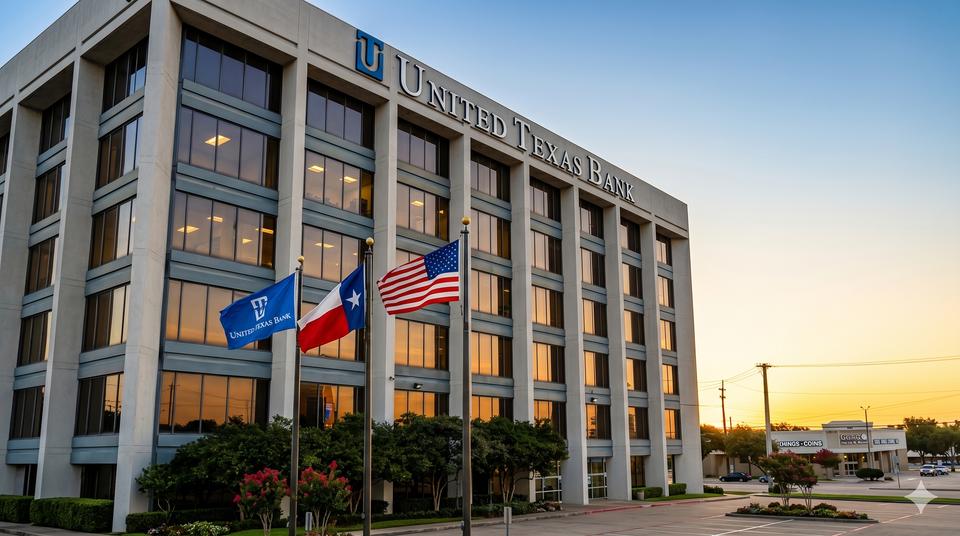
United Texas Bank (UTB) secured approval from the Office of the Comptroller of the Currency (OCC) to convert from a state-chartered financial institution into a nationally chartered bank on May 15, Scott Beck, the president and CEO of the firm, told CoinDesk on Wednesday.
The conversion move, Beck added, is to position his crypto-friendly bank as the primary bridge between the cryptocurrency industry and traditional financial institutions and to provide digital asset services he said the UTB has years fully delivering, while “Wall Street continues to tiptoe.”
The conversion granted by the OCC came with two conditions that Beck said have now been met. “Those conditions were satisfied as of today, May 27,” he said. Since 2024, the UTB operated under a Consent Order with the Federal Reserve, which related to its Bank Secrecy Act and compliance infrastructure.
“Rather than viewing that as a setback, we treated it as a mandate to build something exceptional, and we did. The result is UTB PRISM SENTINAL, our proprietary BSA/AML compliance platform,” he said.
The milestone makes the UTB one of the first banks in the U.S. to successfully complete an OCC conversion since the passage of the Dodd-Frank Act 15 years ago, Beck added. He said the conversion also uniquely positions UTB as a bridge between crypto firms worldwide into the U.S. banking system, access that very few banks today are willing to give.
“The concept for United Texas Bank is a centralized value hub,” said the chair of UTB, a bank he himself said is unknown nationally, but widely sought out by crypto firms.
“If you’re a digital asset player, you can’t get an account at a Bank of America or a Citibank. You can come to United Texas Bank and basically have full access to the U.S. dollar,” he said, adding that his bank has been providing services to reputable crypto firms for about five years, handling over $120 billion in transactions for them yearly.
Standing with the giants
Beck explained that the strategic OCC conversion places the Dallas-based institution on par with money-center giants like Bank of America and JPMorgan Chase, granting it identical federal licensure, full trust powers and direct access to the Federal Reserve’s wire and ACH systems, while retaining the FDIC insurance it had.
However, unlike traditional Wall Street firms that are beginning to explore the crypto ecosystem, UTB already “underpins a massive chunk of global crypto liquidity, clearing $10 billion a month in U.S dollar volume for foreign banks, over-the-counter (OTC) desks and major exchanges.
UTB is not alone in the race for a competitive place within the growing crypto sector in the United States. Last week, Minnesota signed into law new rules allowing local banks to fight Wall Street for cryptocurrency profit. The state banks and credit unions joined forces with lawmakers to push legislation granting them authorization to provide crypto custody services to their clients.
For UTB, the conversion marks an ambitious operational pivot, Beck added. While crypto startups have spent years chasing limited, trust-only charters that bar them from the Federal Reserve’s payment rails, UTB’s national charter bypasses those restrictions entirely.
A U.S. first
“We are the first to move across to the national banking stage with full access to the Federal Reserve for wires and ACH,” Beck added.
By shifting away from the Texas Department of Banking and positioning itself directly under the OCC, UTB aligned its corporate structure with the executive branch of the federal government, shielding its clients from the fractured regulatory landscape that historically choked crypto firms, Beck said.
To capitalize further on its federal upgrade, the bank is launching UTB Atomic, an artificial intelligence-driven, real-time payment network engineered to bring back the round-the-clock liquidity that crypto markets have long craved, and UTB Prism Sentinel, its compliance platform, to address the burgeoning federal oversight of digital assets and stablecoins.
The move is more than just a regulatory rejig; it’s a strategic positioning. While major banks have been cautiously dipping their toes into the crypto waters—often through subsidiaries or partnerships—UTB is planting its flag firmly in the ground, claiming a direct pathway to both the Federal Reserve and the global digital asset flow.
Is UTB truly a challenger to Wall Street?
On paper, yes. The OCC national charter is no small feat. It grants UTB the same federal oversight and access to payment systems as the behemoths. For years, crypto firms have grappled with a fragmented banking system that often shied away from their business. UTB’s explicit focus and established volume suggest they’ve cracked a code many traditional players deemed too risky.
But legacy players have deep pockets and established relationships. Wall Street’s advantage isn’t just its size; it’s the complex web of services and capital markets access it offers. UTB’s success will hinge on its ability to scale its compliance infrastructure, attract institutional clients beyond the crypto-native set, and weather the inevitable regulatory scrutiny that comes with handling such a high volume of digital asset flows.
The real play here isn’t just about processing dollars. It’s about capturing the future of value transfer. If UTB can indeed deliver on its promise of 24/7 AI-driven payments, it’s not just competing; it’s setting a new standard. That’s the kind of disruption the market, and frankly, the entire fintech world, has been waiting for. It’s a bold move from a bank most of the nation hadn’t heard of until now, but one that could, indeed, redefine how the U.S. banking system interacts with the digital economy.
What Does This Mean for Crypto Liquidity?
UTB’s claim to clearing $10 billion a month in dollar volume for global crypto firms isn’t insignificant. This suggests a substantial existing operation that has been operating somewhat under the radar. The launch of UTB Atomic, an AI-driven, 24/7 payment network, is the critical piece here. The intermittency of traditional banking hours has been a persistent pain point for crypto markets, which operate globally and around the clock. Restoring that round-the-clock liquidity through an AI-powered rail could attract significant volume from exchanges, OTC desks, and even institutional investors looking for more efficient settlement mechanisms.
However, the devil, as always, will be in the details. The effectiveness of UTB Atomic will depend on its speed, cost, and reliability compared to existing payment rails, both traditional and nascent blockchain-based solutions. Furthermore, its ability to integrate smoothly with the diverse infrastructure of the crypto ecosystem will be paramount. If it can truly offer a more efficient and compliant on-ramp and off-ramp for U.S. dollars, it could become indispensable.
🧬 Related Insights
- Read more: WLFI Token Hits Record Lows as Trump-Backed Project Doubles Down on Circular DeFi Bet
- Read more: Cambodia’s Getting Serious About Crypto Scams—But Don’t Mistake PR for Progress
Frequently Asked Questions
What does United Texas Bank’s national charter mean for crypto firms?
It means they can potentially access U.S. dollar payment systems and banking services through a federally chartered institution that explicitly welcomes their business, offering greater stability and access than many state-chartered banks have provided.
Will this new bank replace traditional Wall Street services for crypto?
It’s unlikely to completely replace them, but it could offer a more direct and integrated banking bridge for crypto-native firms, potentially forcing traditional players to accelerate their own digital asset strategies to remain competitive.
How does UTB’s AI payment network differ from existing systems?
UTB claims its UTB Atomic network will offer round-the-clock operation and AI-driven efficiency, aiming to overcome the limitations of traditional banking hours and potentially provide faster, more cost-effective transactions for crypto-related dollar volumes.