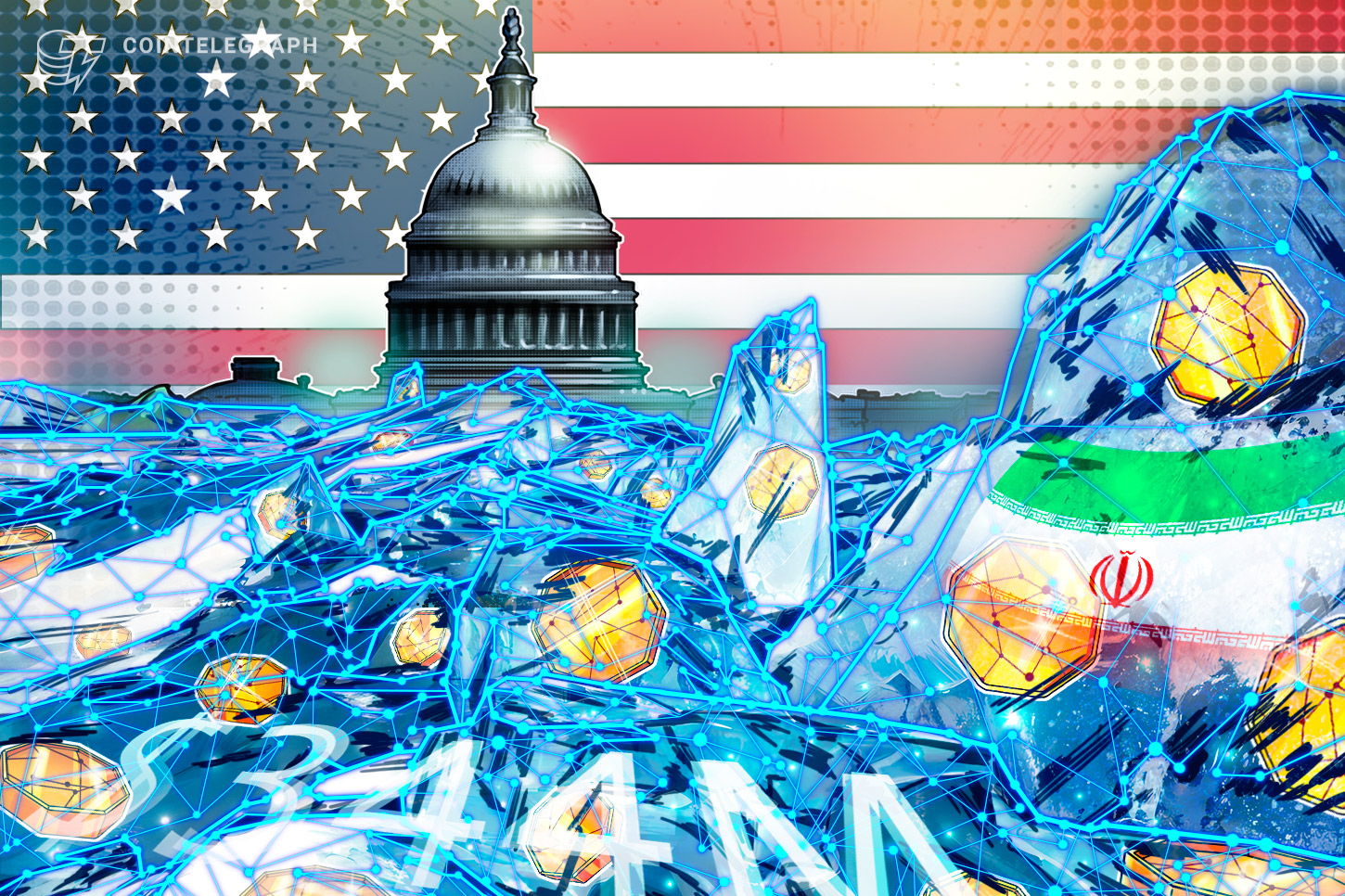
Whoosh! And just like that, nearly half a billion dollars in digital ether — $344 million to be precise — gets yanked from the global ledger. It’s not some rogue hacker’s fantasy; this is Uncle Sam flexing its regulatory muscle in the wild west of cryptocurrency, and guess who’s in the crosshairs? Iran. Specifically, the Treasury Department, via its Office of Foreign Assets Control (OFAC), slammed the brakes on two crypto addresses, chilling them faster than a polar vortex. The alleged culprits? The Islamic Revolutionary Guard Corps and Hezbollah. This isn’t just about tracing illicit funds; it’s about a fundamental shift in how power is wielded on the global stage, now with a digital twist.
Think of it like this: for centuries, nations controlled trade routes, stamped currency, and dictated financial flows through sheer physical dominance and established banking systems. Now, we’ve got these invisible, borderless digital rails. And when a nation like Iran, facing sanctions, starts exploring ways to circumvent those old-school controls by accepting Bitcoin for passage through critical waterways like the Strait of Hormuz, well, you bet the established powers are going to notice. It’s like trying to smuggle goods through a port, but instead of a customs officer, you’ve got a digital bloodhound sniffing out every transaction. The Treasury’s move is less a financial maneuver and more a declaration of intent: the old guard isn’t about to cede control of the digital frontier without a fight.
And Tether, the stablecoin issuer, played a curious, albeit swift, role. They announced they’d frozen over $344 million of their USDt at the behest of US authorities. While they were cagey about naming names initially – just “unlawful conduct” – the Treasury’s subsequent notice confirmed the connection. It’s a fascinating symbiotic relationship, isn’t it? The US government points a finger, and these private entities, operating on the very infrastructure they’ve helped build, act as the enforcers. This level of cooperation, especially given the often adversarial relationship between regulators and crypto firms, speaks volumes about the pressures at play and the implicit acknowledgment of this new digital reality.
This whole kerfuffle comes right on the heels of reports that Iran was even considering charging ships in Bitcoin for passage through the Strait of Hormuz. Imagine: “Toll booth ahead. Please pay in Bitcoin.” Forbes apparently caught wind of this, adding another layer to the unfolding drama. While President Trump has been talking about a ceasefire, the waters around the Strait remain as choppy as ever, with Iran reportedly attacking ships and US naval forces establishing a blockade. It’s a geopolitical thriller playing out in real-time, with crypto as a new, volatile plot device.
Is This the Future of Sanctions Enforcement?
This isn’t merely about seizing assets. It’s a preview of how digital currencies, once seen as a niche for cypherpunks and tech enthusiasts, are becoming integral to the global financial and political landscape. When nations start looking at Bitcoin as a viable payment mechanism to bypass traditional financial sanctions, it forces a reckoning. The entities that issue stablecoins or operate major blockchain networks suddenly find themselves in the unenviable position of being de facto extensions of state power. They become the gatekeepers, the enforcers, the ones tasked with maintaining the integrity of a system that was, at its core, designed to be decentralized and free from such controls. It’s a thorny issue, one that blurs the lines between private enterprise and public policy, and it’s only going to get more complex.
My take? This is the opening salvo in a much larger war for control of the digital economy. For years, we’ve talked about AI as a platform shift, a fundamental reordering of how we do everything. Well, cryptocurrency and its integration into the global financial system? That’s another platform shift, just as profound, and perhaps even more immediate in its geopolitical implications. Nations are waking up to the fact that while they were busy regulating banks and stock markets, a parallel financial universe was being built, and it operates by a different set of rules. The challenge for countries like the US isn’t just to catch up; it’s to figure out how to exert influence and maintain stability in a system that, by its very nature, resists traditional forms of control. This freeze is a bold move, but it’s like trying to dam a river with a net – you can catch some fish, but the water keeps flowing.
The Treasury’s move signals a new era in which digital assets are no longer an obscure niche but a direct battleground for economic and political influence.
This whole episode makes you wonder about the true decentralization of these assets. When a private company like Tether can freeze hundreds of millions at the government’s request, it begs the question: how decentralized are we really talking about? It’s a question that will echo through boardrooms and legislative chambers for years to come. The power dynamics are shifting, and for anyone involved in the crypto space, understanding these evolving relationships between governments, technology providers, and the digital assets themselves is no longer optional. It’s survival.
What Does This Mean for Crypto Users?
For the average crypto user, this highlights the inherent risks of navigating a landscape where regulatory action can have immediate and far-reaching consequences. While the majority of users aren’t involved in illicit activities, their funds exist on a ledger that is increasingly being monitored and, at times, controlled. It’s a stark reminder that the promise of true financial freedom still faces significant headwinds. The dream of a completely uncensorable financial system is a powerful one, but the reality of global politics means that every digital dollar, every Satoshi, exists within a broader context of national interests and enforcement capabilities. So, while the tech itself might be revolutionary, its application and governance are still very much tethered to the old world order.
🧬 Related Insights
- Read more: SoFi’s Big Business Banking: Where Fiat Meets Crypto in Real Time
- Read more: Risk Strategies’ $900K Nightmare: The Tracy Raid That Broke Non-Compete Bonds
Frequently Asked Questions
What exactly did US authorities freeze? US authorities froze two cryptocurrency addresses on the Tron blockchain, holding a combined $344 million USDt, which they claim were linked to Iran’s Revolutionary Guard Corps and Hezbollah.
Why did Tether freeze the funds? Tether froze the USDt stablecoins at the request of US authorities, citing “activity tied to unlawful conduct” as the reason for the action.
Could Iran really use Bitcoin for ship tolls? Reports suggested Iran was considering charging ships in Bitcoin for passage through the Strait of Hormuz, indicating a potential strategy to bypass traditional financial sanctions.