So, what does this actually mean for your portfolio, your favorite trading app, or even your country’s economic standing? It’s not just about blockchain mumbo-jumbo; it’s about how the very plumbing of Wall Street might be about to get a seismic shake-up. Imagine your favorite stock, the one you’ve been watching for months, suddenly becoming a chameleon, changing its stripes depending on where you’re trying to trade it.
That’s the wild, slightly unsettling, future that research from Tiger Research is pointing towards. They’re not just looking at a minor tweak; they’re talking about a “serious structural threat” to the way traditional finance has worked for decades. Think of it like this: for years, all the trading for, say, Apple, was like a massive, bustling central market – all the buyers and sellers in one place, making prices sharp and transactions smooth. Now, imagine that market suddenly splintering into a dozen smaller, independent bazaars, each with its own quirks and price tags. That’s the essence of liquidity fragmentation that’s on the horizon with tokenized stocks.
This isn’t some far-off hypothetical. The US Securities and Exchange Commission (SEC) has essentially opened the floodgates by allowing third parties to list tokenized versions of stocks. This means you could potentially buy a tokenized version of the same Coca-Cola share on a platform built on Ethereum, another on Solana, and yet another on a completely different blockchain. On the surface, it sounds like more choice, more access, right? But dig a little deeper, and the cracks start to show.
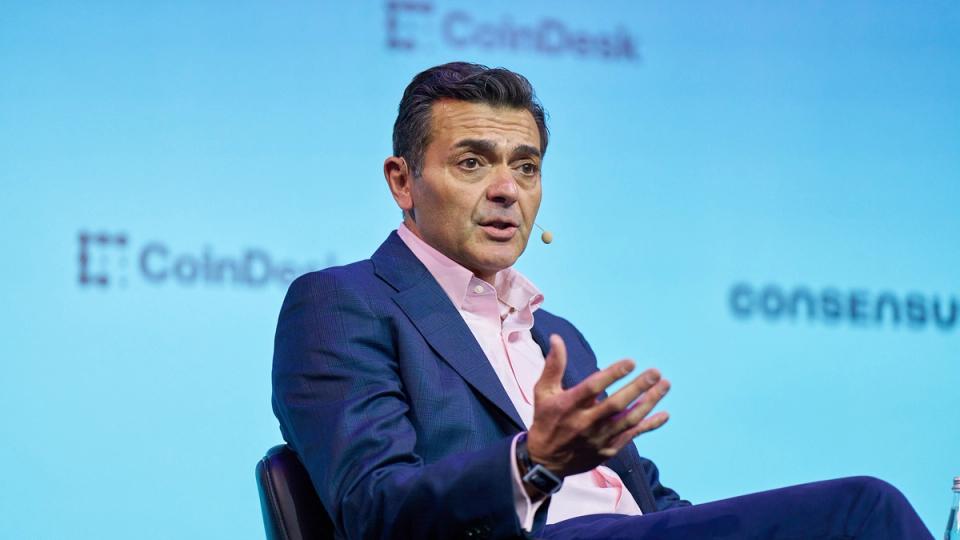
“Traditional finance views the breakup of its previously consolidated, centralized liquidity as a serious structural threat,” said Ryan Yoon, director at Tiger Research.
This dispersion of capital across multiple blockchain platforms means trading volume, the lifeblood of any healthy market, gets sliced and diced. Instead of orders concentrating on established behemoths like the NYSE or Nasdaq, they’ll be scattered. And what happens when trading volume is scattered? You get price discrepancies. You get increased slippage – meaning the price you expect to get when you execute a large order might be worse than you thought. Essentially, the whole market becomes a little less efficient, a bit more wobbly.
Is This Just About Price Wobbles? Not Quite.
Beyond the immediate hit to market efficiency, there’s a much bigger, almost existential concern for national economies: revenue fragmentation. When tokenized stocks trade on various global platforms, particularly those offshore, the hefty fees and revenues that typically enrich domestic exchanges could very well evaporate into the ether (pun intended, perhaps). This isn’t just about some tech company making a few extra bucks; it’s about the competitive edge of a nation’s financial system. If the heart of financial innovation and revenue generation beats elsewhere, the implications for national competitiveness are stark.
And it’s not just Tiger Research sounding the alarm. Maja Vujinovic, CEO of digital assets at FG Nexus, paints an even more unsettling picture, talking about markets splitting into “disconnected pools.” This isolation can lead to dangerous price tracking errors and, quite chillingly, “shadow-shorting vulnerabilities.” This happens when there aren’t enough local buyers to keep a specific token’s price stable, leaving it exposed to wild swings.
It’s like a bunch of smaller, independent ecosystems trying to mimic the complex, interconnected web of a rainforest. Some might thrive, but many could collapse under their own isolation.
But What About the Shiny Bits? Faster Settlements, Lower Costs?
Now, let’s not throw the baby out with the bathwater. Proponents of tokenized stocks are quick to point out the undeniable practical benefits. We’re talking about settlement times that could be measured in minutes instead of days. We’re talking about true fractional ownership, making high-priced stocks accessible to a broader swathe of investors. Transaction costs could plummet, and the tantalizing prospect of round-the-clock trading – no more waiting for the market to open – beckons.
Brian Vieten, a senior research analyst at Siebert Financial, is all in, believing this will “accelerate the transition of the US financial system from legacy rails to onchain blockchain-based rails.” He even anticipates a portion of this activity eventually flowing to established blockchain networks like Bitcoin and Hyperliquid. It’s a vision of a more fluid, accessible, and technologically advanced financial future.
SEC Commissioner Hester Peirce, often seen as a more crypto-friendly voice, has chimed in, suggesting any exemptions will be “limited in scope.” The final rules, however, are still being hammered out, leaving a significant amount of uncertainty.
My unique insight here is that this entire debate mirrors the early days of the internet. Remember when dial-up was the norm, and people questioned if anyone would ever actually buy things online? Traditional financial institutions are currently playing the role of the established bookstores and brick-and-mortar retailers, eyeing the nascent, potentially disruptive online marketplaces with a mix of fear and fascination. The SEC’s move is akin to allowing third-party online retailers to list books without the explicit permission of the publisher – it’s going to create new avenues for commerce but also disrupt existing supply chains and revenue models in ways we’re only beginning to grasp.
This isn’t just an incremental upgrade; it’s a potential platform shift. And like all platform shifts, it’s messy, it’s exciting, and it’s going to redefine who wins and who loses in the financial world of tomorrow.
🧬 Related Insights
- Read more: Crypto Majors Stall as Altcoins Rotate; AI Tokens Jump
- Read more: Iran’s Crypto Tollbooth Sparks New Geopolitical Chess
Frequently Asked Questions
What does it mean for a stock to be tokenized? Tokenizing a stock means creating a digital representation of that stock on a blockchain. This digital token can then be traded, held, and managed using blockchain technology, potentially offering benefits like faster settlement and fractional ownership.
Will tokenized stocks replace traditional stock exchanges? It’s unlikely they will completely replace traditional exchanges in the short to medium term. However, they could coexist and increasingly integrate, offering alternative trading venues and potentially fragmenting liquidity away from traditional platforms.
Are tokenized stocks safer than regular stocks? Safety depends on the specific implementation, the underlying blockchain’s security, and regulatory oversight. While tokenization can offer transparency and efficiency, new risks related to smart contract vulnerabilities and platform security also emerge.