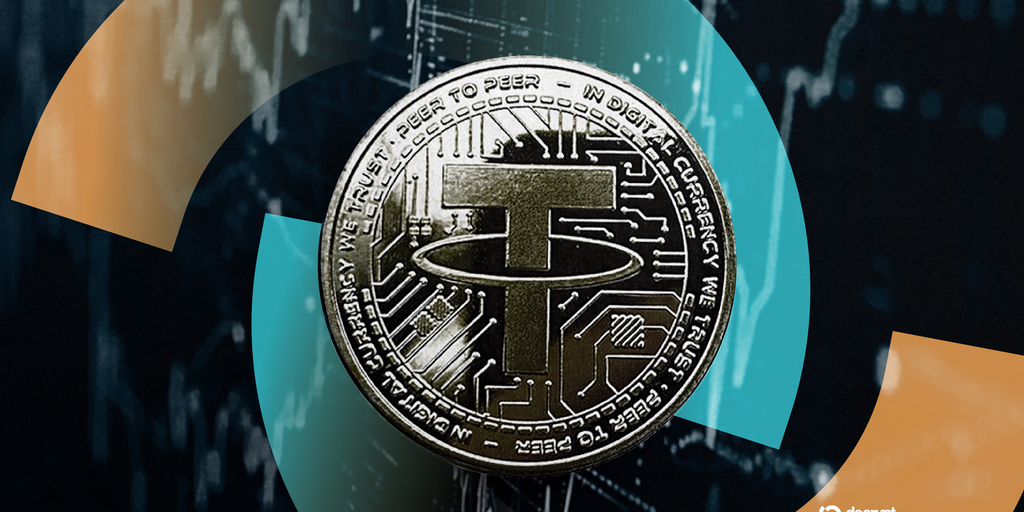
So, Tether—the company behind USDT, that supposedly rock-solid stablecoin you probably use to trade—is telling everyone they raked in over a billion dollars last quarter. A cool $1.04 billion, to be precise. And they’re also trumpeting a record $8.23 billion buffer in their reserves. Sounds great, right? More money, more backing. But here’s the thing: this news lands smack dab in the middle of a crypto slump, where trust is as scarce as a genuinely private Bitcoin transaction. This isn’t about a company celebrating its success; it’s about how much stability—or illusion of it—you’re betting on when you hold their token.
The Billion-Dollar Question: Who’s Actually Making Bank?
Let’s cut through the corporate-speak. Tether isn’t in the business of charity. They profit by issuing USDT. Every time someone buys USDT, Tether gets to hold onto those dollars—or whatever asset they’ve promised to back it with—and potentially earn yield on them. That $1.04 billion profit? That’s the result of holding vast sums of money, and in this case, a whole lot of U.S. Treasuries. They’re positioning themselves as major players in the sovereign debt market, which is frankly bizarre for a company that was once, and arguably still is, the Wild West of the crypto financial system. This isn’t just about USDT anymore; it’s about Tether becoming a quasi-financial institution, and that raises a whole other set of uncomfortable questions.
The company boasts about $141 billion allegedly held in U.S. Treasuries. That’s a staggering figure. For context, that’s more than the annual budget of many small countries. But here’s the kicker: this isn’t a Big Four audit. Nope. It’s from an Italian firm that, from what I’ve seen over the years, often relies heavily on what the company itself provides. It’s like asking the fox to audit the henhouse security system. And now they’ve started an audit with KPMG. Started. That’s like saying you’ve begun a marathon when you’ve only laced up your shoes. We’ve heard this song and dance before with Tether. Promises, attestations, and then a slow trickle of information that’s just enough to keep the wolves at bay.
The Ghost of Audits Past
This announcement about the audit commencing feels like a carefully timed release, designed to soothe nerves frayed by market turbulence and the ever-present specter of Tether’s historical opacity. Remember the days when they claimed to have billions in cash, only to reveal it was a mix of cash, cash equivalents, and commercial paper—some of which turned out to be from dodgy issuers?
“The company said Friday that the audit commenced during 2026’s first fiscal quarter.”
See? It commenced. Not concluded. Not verified. Commenced. This is classic PR maneuvering. They want you to feel secure, to believe that this time, it’s different. That the $141 billion in Treasuries is as solid as… well, U.S. Treasuries. But the proof, as they say, is in the pudding. And we haven’t even seen the recipe yet, let alone tasted the pudding.
A Bear Market’s Best Friend (or Worst Nightmare?)
While the rest of the crypto world has been licking its wounds, Tether has been quietly stacking paper. Their Q1 profit is a significant chunk of change, and it contrasts sharply with the general crypto downturn. This profit isn’t just from stablecoin issuance; it’s from the yield earned on the massive reserves they hold. In a low-interest-rate environment, holding such vast amounts of Treasuries would be profitable. In the current climate, it’s even more so. They’re essentially acting as a massive, unregulated money market fund for the crypto world, and the more volatile things get, the more people might flock to the perceived safety of USDT.
This is where the skepticism truly bites. If USDT is meant to be a stable 1:1 peg to the dollar, its value should be intrinsic to that peg. But Tether’s profits come from what they do with the reserves. The more they profit from these reserves, the further they might be incentivized to take on risk, or to invest in assets that generate higher yields, which implicitly means more risk. It’s a bit of a paradox, isn’t it?
And let’s not forget the political angles. Senators grilling Treasury Secretaries about their ties to offshore entities? That’s not a sign of a healthy, transparent industry. It’s a giant red flag, waving furiously in the wind, warning everyone that the powers-that-be are starting to pay very close attention. The attempt to gain a foothold in the U.S. with a regulated token is a smart move, but it also brings a whole new level of scrutiny that Tether has historically avoided like the plague.
The Real Risk Isn’t Just Price
The danger isn’t necessarily that USDT will depeg tomorrow because of this report. It’s the long-term implications of Tether’s growing influence and its still-opaque financial dealings. When a stablecoin issuer becomes one of the largest holders of U.S. debt, it creates a feedback loop of interdependence that’s frankly terrifying. If Tether were to falter, the ripple effects wouldn’t just be contained within crypto; they’d hit traditional finance too. And we’re talking about an entity that has, for years, operated with less transparency than a Las Vegas magician.
So, while Tether celebrates its billion-dollar payday, remember that the real question for anyone holding USDT isn’t how much profit Tether is making. It’s about whether those reserves are truly as strong and as liquid as they claim, especially when the market decides to test them. The audit is a step, yes. But we need to see the finished product, not just the commencement announcement, before we can even begin to breathe easy.