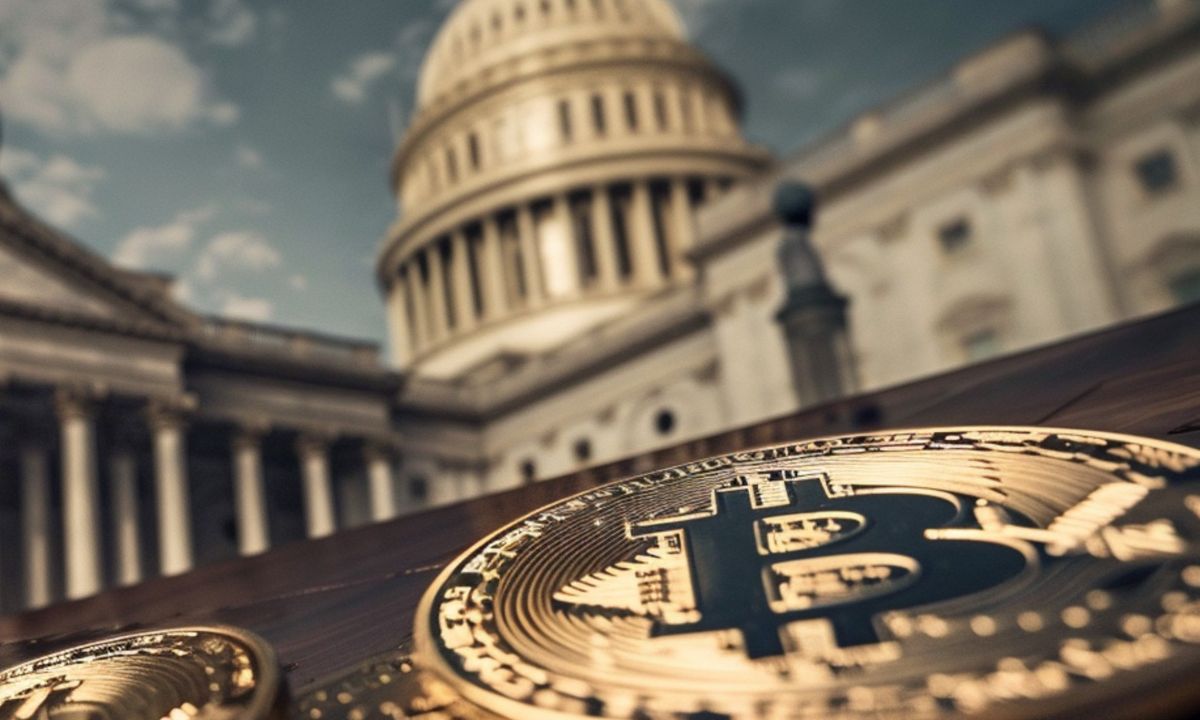
And just like that, the Senate has thrown a legislative lifeline – or perhaps just a slightly tangled rope – to the beleaguered crypto industry. A resounding ‘yes’ vote on a recent bill, details of which are still being parsed with the intensity usually reserved for deciphering ancient hieroglyphs, signals a shift. But don’t mistake this for a definitive victory lap. This isn’t the clear blue sky everyone’s been hoping for; it’s more like a partly cloudy forecast with a chance of persistent drizzle.
The reason for this cautious optimism? Well, legislation is rarely a simple on/off switch. It’s more like a complex ecosystem being coaxed into a new pattern. Regulations, by their very nature, sculpt markets, creating new champions and perhaps leaving others in the dust. And the ripple effects? Those are the real wildcards.
Is This Bill a Boon or a Burden?
This vote, ostensibly a step toward clearer rules for digital assets, has left many in the crypto space scratching their heads. The core issue is that while a legislative body has affirmed something, the ‘what’ remains frustratingly fuzzy. Think of it like a chef announcing they’re definitely making dinner, but then just handing you an unopened grocery bag. You know food is coming, but the actual culinary outcome is anyone’s guess.
The bill’s passage might be seen as a win by proponents who argue that any regulatory framework, however imperfect, is better than the current Wild West. It’s an acknowledgment that digital assets aren’t going away and need a defined space within the financial system. However, the devil, as always, is in the details—details that are still being hammered out, debated, and potentially reinterpreted.
Regulations can create winners and losers, as well as kick off unpredictable second-order effects.
This sentiment, echoed by many in the industry, perfectly captures the tightrope walk. The very act of regulation, even with good intentions, inevitably shifts power dynamics. Some entities will find themselves suddenly empowered with a clearer path to operation, while others, perhaps those operating in gray areas, might face existential challenges.
The AI Parallel: A Platform Shift in the Making?
What this moment reminds me of is the early days of the internet, or more recently, the AI explosion. These aren’t just incremental improvements; they’re fundamental platform shifts. When the internet went mainstream, businesses had to rethink everything from marketing to customer service. When AI started its meteoric rise, we saw the dawn of generative models that felt like pure magic.
Crypto regulation feels like that. It’s not just about tweaking tax laws for Bitcoin. It’s about defining the infrastructure, the rules of engagement, for an entirely new class of assets and the financial innovations they enable. Will this bill provide the stable ground upon which truly novel financial products can be built, or will it be a set of guardrails so restrictive they stifle innovation before it can even take flight?
The challenge here is that the technology and its applications are evolving at a speed that legislative bodies historically struggle to match. It’s like trying to nail jelly to a wall – a formidable task. The hope, of course, is that this bill provides a foundational layer, a starting point that allows for adaptation and refinement as the crypto landscape matures.
But the uncertainty isn’t just a mild inconvenience; it’s a genuine impediment. Companies need clarity to invest, to build, and to scale. Vague regulations breed caution, and caution can lead to capital flight and stifled development. It’s a cycle that the crypto industry has seen play out before, often to its detriment.
What Does This Mean for the Average User?
For the person who owns a small amount of Bitcoin or dabbles in NFTs, this might seem like distant political maneuvering. But the reality is that clearer regulation — eventually — could mean more stability, potentially fewer scams, and a more integrated digital asset experience within mainstream finance. Imagine being able to use your crypto holdings as easily and securely as your checking account. That’s the dream, and a legislative push, even a hazy one, is a step in that direction.
However, until that clarity arrives, users will continue to navigate a landscape where the rules can feel arbitrary and where the risks, while perhaps diminishing, are still very real. The hope is that this Senate vote is the first domino, setting in motion a cascade of more specific, more understandable, and ultimately, more beneficial regulations for everyone involved.
🧬 Related Insights
- Read more: OpenAI Exodus: Weil Leaves, Prism Folded as AI Giant Rejigs Strategy
- Read more: [Alloy’s AI Bet] Spiekerman on Agentic AI vs Fraud
Frequently Asked Questions
What did the Senate vote on regarding crypto?
The Senate voted to pass a bill concerning cryptocurrency regulation, though specific details and their full implications are still being clarified.
Will this bill make crypto clearer?
While the vote signifies legislative movement, the industry awaits concrete details and implementation to determine the extent of regulatory clarity it provides.
What are the ‘second-order effects’ of crypto regulation?
These are the indirect consequences, such as impacts on innovation, market competition, and the development of new financial products, that arise from new regulations.