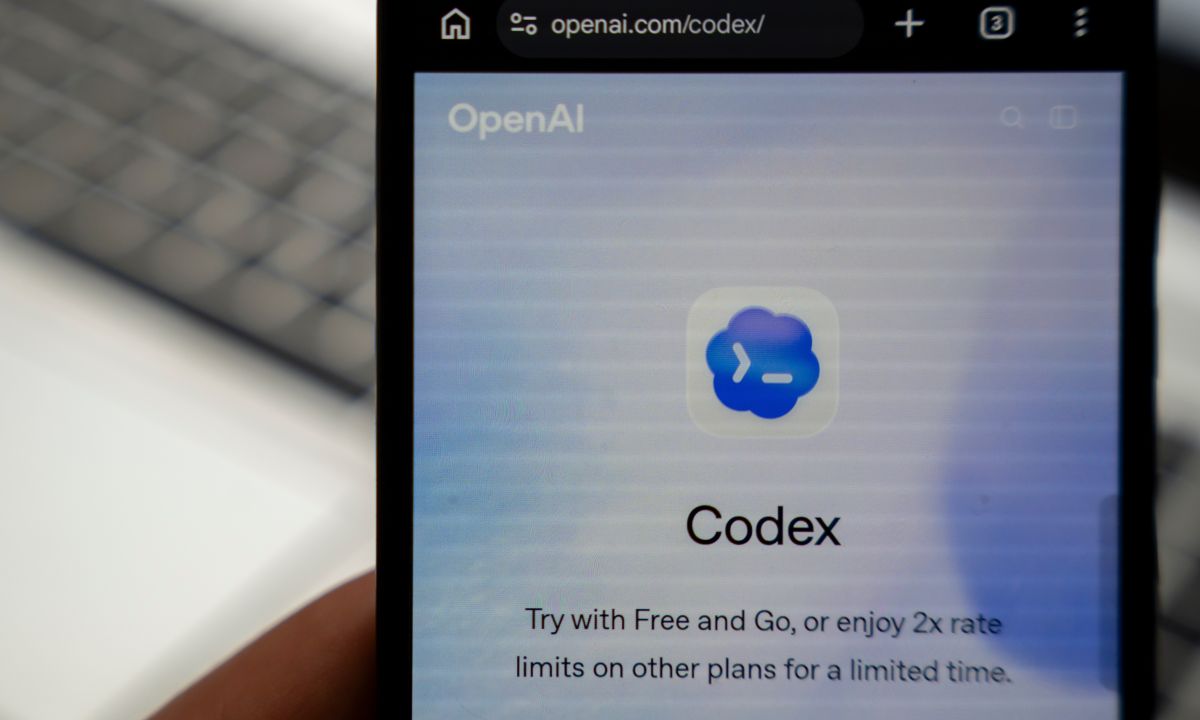
Did you ever stop to think about the silent architects behind those multi-billion dollar revenue numbers? We’re told OpenAI raked in nearly $6 billion in its first quarter, a figure that sounds like it could power a small nation. The easy narrative, the one splashed across headlines, points to the rising demand for AI tools, with specific mentions of Codex. But if you peel back the shiny veneer, a more complex picture emerges, one that asks not just ‘how much?’ but ‘how?’ and more importantly, ‘why?’
Here’s the thing: attributing $6 billion in revenue to a single tool, even one as potent as Codex, feels a little too neat. Codex, the AI system that translates natural language into code, is undoubtedly a powerful piece of infrastructure. It’s the engine that lets developers build applications faster, debug with less pain, and frankly, interact with computing in a way that was science fiction just a few years ago. Its integration into products like GitHub Copilot is a prime example of its utility.
But does it directly drive that much revenue? Or is it a foundational technology that enables other revenue streams, making the attribution less about direct sales and more about ecosystem enablement? It’s like saying the invention of the combustion engine directly drove the revenue of every gas station in America. True, but incomplete.
The Architectural Undercurrents of AI Finance
What’s truly fascinating here isn’t just the dollar amount, but what it signifies about the underlying architectural shifts in how value is being created and captured in the AI economy. We’re not just talking about selling chatbots anymore. We’re talking about embedding intelligence into every conceivable workflow, and Codex is a crucial component in that grander scheme of making sophisticated tech accessible.
Think about it: Codex doesn’t just write code; it democratizes it. It lowers the barrier to entry for innovation. This means more developers can build more things, faster. And when more things are built on top of a platform, that platform’s value and potential for revenue generation naturally skyrocket. It’s a compounding effect, a network effect for intelligence.
The original reporting suggests that “demand for artificial intelligence tools is still rising.” That’s an understatement of epic proportions. It’s not just rising; it’s fundamentally reshaping industries. And while Codex might be a poster child for this revolution, it’s part of a larger wave of foundational AI models and infrastructure that are becoming the bedrock of modern software development.
Why Does This Matter for Developers?
For developers, this influx of capital and the perceived success of tools like Codex present a double-edged sword. On one hand, it means unprecedented access to powerful development aids, accelerating workflows and enabling more ambitious projects. On the other, it raises questions about the future of specialized coding skills. If AI can write competent code, what does that mean for junior developers or those focused on rote tasks?
It’s less about AI replacing developers and more about AI redefining what a developer does. The focus shifts from manual syntax writing to higher-level problem-solving, system design, and prompt engineering. The architect role, if you will, becomes paramount.
What’s also being underplayed is the sheer cost of competing at this level. OpenAI isn’t just selling code generation; they’re investing billions in compute power, model training, and attracting top-tier talent. This $6 billion quarter isn’t just profit; it’s fuel for an ongoing, incredibly expensive arms race in AI development.
So, while we celebrate OpenAI’s financial success and acknowledge the role of tools like Codex, let’s also remember that this is just the beginning. We’re witnessing the early stages of a fundamental restructuring of the tech landscape, driven by intelligence that is increasingly integrated into the very fabric of how we build.
OpenAI generated nearly $6 billion in first-quarter revenue, a sign that demand for artificial intelligence tools is still rising even as the cost of competing at the top of the AI market remains enormous.
This quote, while factual, glosses over the immense computational and research costs. The revenue is one side of the coin; the investment required to achieve it is the other, arguably more telling, side.
A Historical Parallel? The Dot-Com Boom’s Infrastructure
If you squint hard enough, you can see a faint echo of the dot-com boom here. During that era, companies that built foundational internet infrastructure – the backbone of the digital world – saw immense valuations. While many individual dot-coms imploded, the underlying infrastructure providers (think Cisco, or the early ISPs) laid the groundwork for the internet we know today. AI infrastructure, and tools like Codex that abstract complexity, are playing a similar foundational role now.
The question isn’t whether AI tools are valuable, but how their value is being attributed and how this massive capital infusion is shaping the architectural direction of technology itself. It’s a reminder that behind every flashy application is a layer of increasingly sophisticated, and increasingly expensive, underlying intelligence.
🧬 Related Insights
- Read more: Privacy is Crypto’s Next Killer App: $1B+ Raised
- Read more: Hyperliquid Whale’s $38M Short: Market Signal or Noise?
Frequently Asked Questions
What is OpenAI’s Codex?
OpenAI’s Codex is an AI system trained on vast amounts of text and code, capable of translating natural language prompts into executable code across various programming languages. It’s a key component powering tools like GitHub Copilot.
How much revenue did OpenAI generate?
OpenAI generated nearly $6 billion in revenue during its first quarter.
Will AI tools like Codex replace human developers?
It’s more likely that AI tools will augment, rather than replace, human developers. They can automate repetitive tasks, accelerate coding, and assist in debugging, allowing developers to focus on higher-level problem-solving, design, and creativity. The role of the developer is evolving, not disappearing.