Bitcoin’s implied volatility just hit 36%, a level not seen in eight months. That’s the kind of number that makes you sit up and pay attention. It suggests professional traders aren’t bracing for wild swings, at least not right now. But here’s the kicker: this isn’t necessarily a sign of sleepy markets. In fact, derivatives data is starting to whisper about a potential breakout, fueled by an overconfident pack of bears.
This lull in volatility follows a choppy period. Remember that sharp price drop back in January and February? That injected a jolt of volatility, with implied levels still hovering above 50% even when Bitcoin was churning between $63,000 and $71,000 in March. Now, as BTC has found a relatively stable footing around the $60,000 support level, the perceived risk has diminished, and with it, volatility. Some argue that increased institutional involvement and the maturation of Bitcoin’s derivatives market — think perpetual futures and more sophisticated products — have smoothed out the ride. Tyler Evans of UTXO Management pointed out that digital credit products are acting as a buffer, allowing large holders to collateralize loans rather than being forced to dump their BTC. It’s a fascinating evolution, turning a notoriously volatile asset into something a bit more… manageable for the big players.
Is Bitcoin Volatility Finally Tamed?
Don’t bet on it. While Bitcoin’s volatility might not climb back to the stratospheric levels of its early days, it’s unlikely to stay pinned below 35% indefinitely. This asset is still young in adoption terms, with vast untapped potential use cases still on the horizon. Historically, major price dislocations often follow periods of consolidation like this one. External factors, from geopolitical tensions to broad economic stimuli or even frothy stock markets, can and do ripple through to Bitcoin. And then there are the liquidations — the accelerant that can turn a modest price move into a rocket launch.
The liquidation heatmap is particularly telling here. We’re seeing a dense cluster of short positions — bets that Bitcoin will go down — stacked between $78,000 and $83,000. Bears have perhaps grown a touch too comfortable with BTC staying below $90,000 for several months. This overconfidence could be exactly what sets the stage for a dramatic reversal.
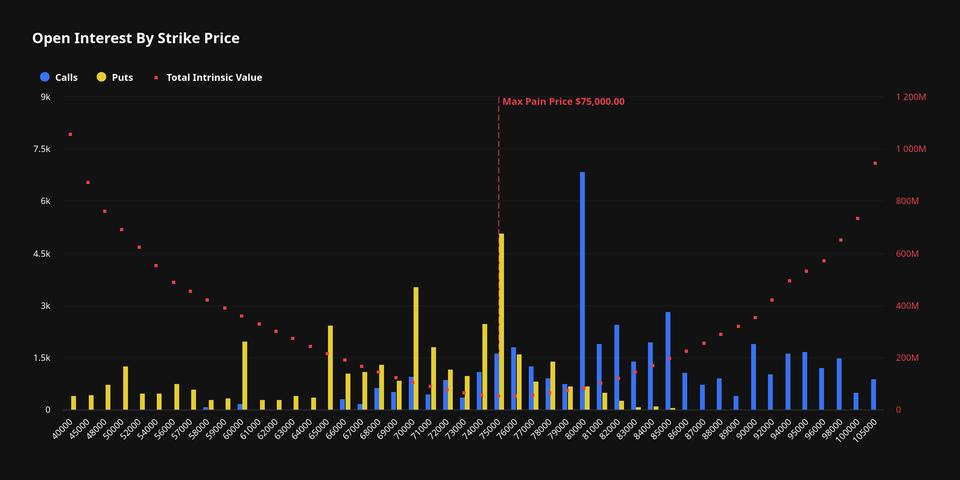
When we look at the Bitcoin options skew, it paints a picture of professional traders leaning towards bearish bets. A 14% premium on put options (the right to sell) compared to call options (the right to buy) is a clear signal of fear. Under normal market conditions, this skew should hover closer to neutral. This current sentiment suggests that a sustained move above $82,000 would likely trigger a cascade of short liquidations, turbocharging a bullish rally. While a retest of $72,000 seems somewhat baked into current pricing, the real fireworks might be reserved for that higher ceiling. It’s the kind of setup that reminds you volatility isn’t just noise; it’s often the precursor to opportunity.
Professional traders currently fear a Bitcoin price decline as put (sell) options trade at a 14% premium relative to call (buy) instruments.
This isn’t about predicting the direction. But when you combine eight-month low volatility with a market that seems heavily positioned for a downturn, the odds shift. A breakout above key resistance levels, especially that $82,000 mark, could unleash a significant squeeze. It’s a classic case of the market punishing the complacent.
The Implications of Maturing Derivatives
The growing use of collateralized loans by miners and companies accumulating BTC is fundamentally altering how the asset is held and managed. Instead of forced selling during price dips, they can now use their holdings. This adds a layer of stability, at least theoretically, to the average holder. However, for the use traders playing with borrowed money in the derivatives market, these periods of low volatility can be a dangerous calm before the storm. They might be underestimating the potential for a rapid upward price movement that could wipe out their positions.
When Will the Next Big Move Happen?
Predicting the exact timing of a Bitcoin breakout is akin to predicting the weather months in advance – fraught with uncertainty. However, the current data points strongly towards a build-up of energy. The combination of suppressed volatility and concentrated short positions suggests that the market is primed for a significant price discovery event. Whether that event is triggered by institutional accumulation, positive regulatory news, or simply the mechanics of the derivatives market itself remains to be seen. What is clear is that the current equilibrium is unlikely to hold indefinitely.
FAQ
What does a low Bitcoin volatility suggest? Low implied volatility suggests that traders expect fewer significant price swings in the short term, indicating a period of consolidation or stable pricing.
Is Bitcoin’s low volatility a good sign for investors? It’s a mixed signal. While it can mean less risk in the immediate term, it often precedes a larger price move, which could be upward or downward. The current derivatives data suggests a bullish lean.
Will this low volatility lead to a Bitcoin price increase? Low volatility itself doesn’t predict direction, but market dynamics, such as concentrated short positions, can amplify a rally if Bitcoin’s price begins to climb significantly.