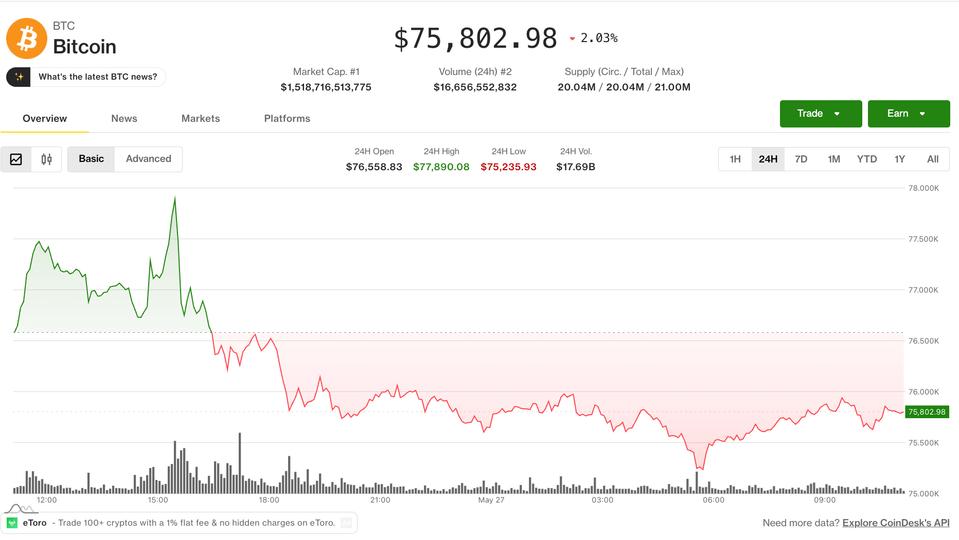
So, Bitcoin’s aiming for $73,000. Big deal. For two decades, I’ve watched these same patterns play out in Silicon Valley, then bleed into crypto with the predictable fervor of a revival meeting. A “weekly trend line holds price hostage.” Hostage? Really? It’s a chart, not a bank robber. And the only thing really being held hostage here is the average retail investor’s common sense.
Look, the chatter is that this specific line on a graph – a line some analyst drew with a digital crayon – is acting as a magical floor. If it holds, then BAM, up to $73K we go. This is the same song and dance we’ve heard before. Remember the run to $69K? That felt like the finale of a fireworks show, all flash and noise, followed by a quiet, sobering dawn. Who ended up holding bags then?
Is This Just Technical Jargon for ‘We Hope’?
Let’s be blunt: When you hear about “trend lines holding price hostage,” what you’re really hearing is a sophisticated way of saying, “we think it might go up if enough people believe it will.” It’s a self-fulfilling prophecy fueled by the endless well of speculation and the desperate need for the next big win. The people screaming loudest about these trend lines aren’t the ones buying the dip for their retirement fund; they’re often the ones who profit from the chatter itself. Think influencers, analysts with subscription services, and yes, even the exchanges that rake in fees on every volatile trade.
“Bitcoin is showing strong support at its weekly trend line, which could propel it towards new all-time highs if sustained.”
This kind of statement, while technically describing market action, conveniently sidesteps the messy reality of who gets rich and who gets burned. It’s all very mathematical and detached, which is precisely how you can sell people a dream without being held accountable when it crumbles.
Who’s Actually Making Money Here?
This is the question that never gets enough airtime. Is it the millions of small-time traders desperately trying to time the market based on these obscure technical signals? Probably not. They’re the ones paying the transaction fees, the ones who panic sell when the “hostage” narrative shifts, and the ones who are left holding the digital equivalent of worthless IOUs. The real money? It’s made by the early adopters, the large institutional players with their sophisticated algorithms and their ability to move markets with a single large buy order, and, as I mentioned, the platforms that facilitate all this trading.
It reminds me of the dot-com boom, but with even faster cycles and less tangible underlying value. Everybody was chasing the next internet IPO, convinced they were investing in the future. Many were. But for every Amazon, there were a dozen Pets.com. The difference in crypto is that the ‘product’ is often just the promise of future value, tethered to a narrative rather than a tangible service or asset.
Why Does This Matter for the Average Person?
Because this isn’t just about Bitcoin enthusiasts swapping memes and charting arcane indicators. The fervor around these price targets translates into real money flowing into and out of this volatile asset class. When the narrative is bullish, venture capital flows, startups get funded on the back of speculative excitement, and the hype machine churns out more promises. When the narrative sours, the money dries up, companies fold, and the dreams evaporate, leaving behind a trail of bewildered investors.
So, while Bitcoin traders might be “eyeing $73K,” and that weekly trend line might be holding, it’s worth remembering that trend lines are just lines. They reflect past behavior, not a guaranteed future. The real story is the human element – the hope, the greed, and the relentless pursuit of easy money that drives these markets. And in my experience, that’s a narrative that never really changes.
🧬 Related Insights
- Read more: Justin Sun Calls Out Trump-Backed WLFI as User ATM After $75M DeFi Grab
- Read more: SoFi’s Institutional Crypto Play: The Banking-Blockchain Merger Is Happening Now
Frequently Asked Questions
What does Bitcoin’s weekly trend line mean?
A weekly trend line is a graphical representation of a cryptocurrency’s price movement over a week, used by traders to identify potential support or resistance levels. In this context, it’s being eyed as a potential indicator for future price direction.
Is Bitcoin going to reach $73,000?
While some traders are optimistic and believe Bitcoin could reach $73,000 based on technical analysis of trend lines, this is not a guarantee. The cryptocurrency market is highly volatile, and prices can be influenced by numerous factors, including market sentiment, regulatory news, and macroeconomic events.
Who benefits most from Bitcoin price fluctuations?
Early investors, large institutional holders, and the platforms facilitating cryptocurrency trading (exchanges) often stand to benefit the most from significant price fluctuations due to their scale and the fees generated. Retail investors can also profit but often face higher risks due to market volatility and timing challenges.