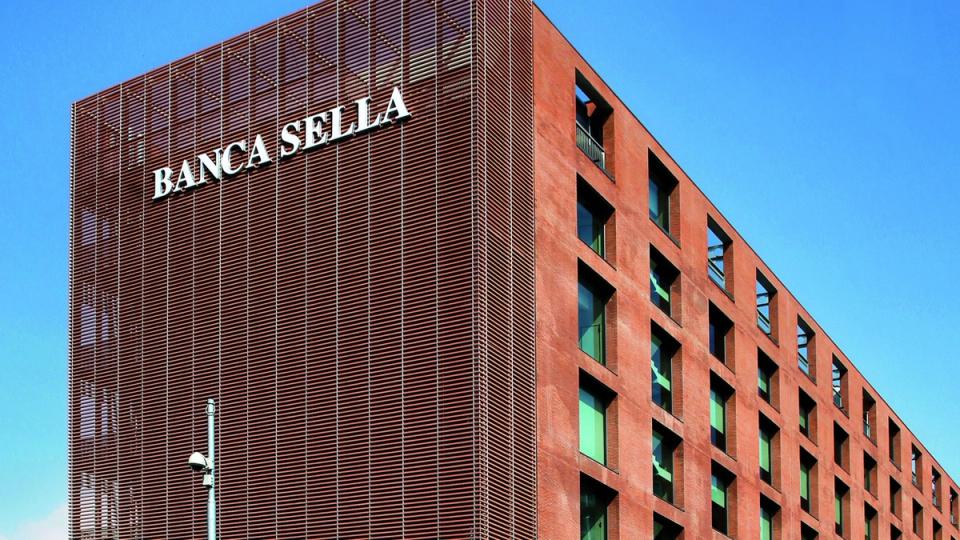
Forget the whispers; the stampede is starting. Banca Sella, a name that echoes through Italian banking history, just became the absolute first in the nation to get the official nod for crypto-asset services. We’re talking custody, we’re talking transfers – the foundational pillars of digital asset management, now greenlit by the Bank of Italy under the new MiCA (Markets in Crypto-Assets) Regulation.
This isn’t just another tech company dabbling in blockchain; this is a centuries-old institution stepping boldly onto the digital frontier. For years, banks have been like cautious onlookers at a wild carnival, peering through the gates at the explosive growth of crypto. Now, one of them has bought a VIP ticket and a backstage pass.
A Regulatory Milestone or Just a Smart Move?
Here’s the thing: MiCA isn’t just some fluffy European directive. It’s a framework designed to bring clarity and safety to a market that’s often been compared to the Wild West – exciting, yes, but also prone to the occasional tumble. By completing the notification process, Banca Sella isn’t just getting permission; it’s signaling its readiness to operate within a structured, regulated environment. This is what separates the serious players from the fleeting trends.
Think of it like this: for the longest time, offering crypto services was akin to building a skyscraper without a building permit. It might stand, but the risk was immense. Now, MiCA is the permit, the blueprints, and the inspections all rolled into one. Banca Sella, by embracing this, is showing that it’s building to last.
The ‘Why Now?’ of Digital Assets for Traditional Banks
Why the sudden sprint from the vaults to the blockchain? It’s simple: client demand and the undeniable realization that digital assets are here to stay. For too long, banks have treated crypto as a fringe phenomenon, a fad for tech bros and speculators. But the data, and increasingly, the conversations with their own wealthy clients, tell a different story. People want to hold, trade, and even borrow against these new forms of value. And if your bank isn’t facilitating that, you’re going to find someone who will.
Banca Sella’s move is a powerful bet that the future of finance isn’t just digital currency, but a hybrid model where traditional banking infrastructure meets the innovation of crypto. It’s about offering a secure, regulated bridge for customers who want to explore this new asset class without navigating the treacherous waters of unregulated exchanges. It’s a platform play, plain and simple.
What This Means for the Italian Financial Ecosystem
This isn’t just a win for Banca Sella; it’s a splash that will ripple across Italy’s entire financial landscape. When a prominent bank like Sella makes this kind of public commitment, it’s a siren call to others. Expect a domino effect. Other Italian banks, and likely their European counterparts, will be watching closely, assessing their own readiness and their competitive positioning. The pressure is on.
Furthermore, this authorization validates the MiCA framework itself. It shows that regulation doesn’t have to stifle innovation; it can, in fact, enable it by building trust and providing a clear set of rules. This is a crucial step toward integrating digital assets into the mainstream financial system in a safe and sustainable way.
For the first time, a banking institution in Italy has the authorization to provide crypto-asset services, relating in particular to the custody and transfer of digital assets.
This quote, directly from the announcement, is understated but carries immense weight. It’s the sound of the old guard not just opening the door, but walking through it. The future of finance is arriving, and it’s not waiting for anyone to catch up. Banca Sella just bought an early ticket to the next act.
The AI Analogy: From Calculator to Quantum Computer
We’re seeing a fundamental platform shift here, not unlike the transition from basic arithmetic to the advent of artificial intelligence. For years, financial institutions were like mathematicians with an advanced calculator – proficient but limited. Now, they’re being asked to run calculations on a quantum computer.
Banca Sella, by getting this authorization, is essentially saying, “We’re not just upgrading our calculator; we’re learning to operate the quantum machine.” It’s about unlocking entirely new computational possibilities for financial services, from novel investment strategies to more efficient and secure transaction processing. The potential is staggering, and the banks that embrace this transformation early will undoubtedly reap the rewards.