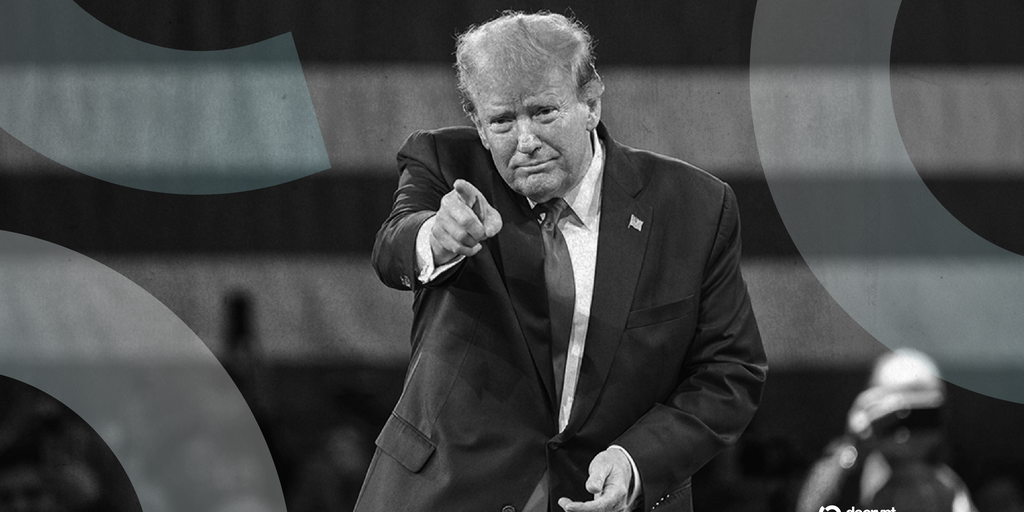
A subtle ripple in the vast ocean of financial filings, yet it tells a compelling story. The latest ethics disclosure from the White House reveals President Trump has been actively trading crypto-adjacent stocks, a fascinating development that grounds the abstract world of digital assets squarely in the familiar territory of public markets.
This isn’t just about policy anymore; it’s about portfolio. The filings, officially known as 278-T forms, detail a flurry of securities transactions, stretching into the thousands and encompassing a wide spectrum of the market. But what’s really caught our eye—and should grab yours too—are the specific entries that point toward a direct engagement with the crypto ecosystem through traditional stock purchases.
Think of it like this: for years, crypto has been this separate, almost alien planet. Now, we’re seeing astronauts (and in this case, a president) planting flags on that planet using the very established rocket ships of Wall Street. We’re talking about trades involving Coinbase, the behemoth of crypto exchanges, and Robinhood, the platform that has become synonymous with democratizing—or perhaps gamifying—investing for a new generation. And let’s not forget the Bitcoin miners, firms like MARA Holdings and Cleanspark, whose fortunes are tied directly to the digital gold rush.
The scope of these disclosed trades is, frankly, staggering. While broad market plays in giants like Nvidia and Amazon are noted, it’s the deeper dives into crypto-related equities that spark particular intrigue. One Coinbase purchase alone, reported between $100,001 and $500,000, lands as a substantial bet on the future of digital asset infrastructure. Another, slightly smaller, followed just a month later. Robinhood also saw a six-figure investment.
These aren’t minor, speculative flutterings. These are significant allocations of capital, suggesting a belief—or at least, a strategic engagement—in the underlying businesses that power the decentralized revolution.
The Independent Manager Defense: A Familiar Tune
Naturally, with such a high-profile figure involved, the immediate question is one of control and influence. The Trump Organization has been quick to offer its standard clarification: these are not the president’s direct picks. According to a spokesperson, all holdings are managed through “fully discretionary accounts independently managed by third-party financial institutions.”
“President Trump’s investment holdings are maintained exclusively through fully discretionary accounts independently managed by third-party financial institutions with sole and exclusive authority over all investment decisions.”
This statement is crucial. It aims to draw a firm line between the president’s personal financial activities and his official duties, a particularly sensitive point in the often-contentious world of political finance. It’s the classic wall, designed to prevent accusations of insider trading or undue influence. The Trump Organization insists that neither the president nor his family has any role in selecting, directing, or approving these specific investments.
Why Does This Matter Beyond the Headlines?
Here’s the real kicker. This isn’t just about who’s buying what stock. This is about the platform shift that Artificial Intelligence represents for finance, and by extension, for how everyone invests. AI is not just a tool; it’s becoming the operating system for everything, including how sophisticated trading decisions are made, even when managed by third parties. These filings, while seemingly mundane disclosures, hint at a future where the lines between traditional finance and the burgeoning digital asset world are not just blurred, but actively integrated at the highest levels.
We’re witnessing the maturation of an asset class. What was once the domain of cypherpunks and early adopters is now showing up in the disclosed portfolios of world leaders. This integration signifies a tectonic shift. It’s like discovering that the same engineers building the most advanced AI models are also tinkering with the fundamental architecture of the internet—it changes everything.
The implications for the broader market are profound. When individuals and entities with significant capital and influence engage with crypto equities, it lends a certain gravitas and legitimacy to the sector. It signals to institutional investors, and indeed to the public, that these aren’t just fringe experiments anymore. They are potential pillars of future financial systems.
And this trend predates Trump’s filings. We’ve seen traditional hedge funds, asset managers, and even sovereign wealth funds slowly but surely dipping their toes into the digital asset waters. The crypto exchanges and mining operations are the most accessible on-ramps for this engagement via public markets. Their success, and by extension their stock prices, become proxies for the health and adoption of the broader crypto economy.
So, while the news cycle might buzz about political disclosures, Fintech Dose sees something far more fundamental: the undeniable march of digital assets into the mainstream financial consciousness, propelled by the very AI that’s reshaping how we understand and interact with value itself. This is the future, arriving not with a bang, but with a carefully filed 278-T.
🧬 Related Insights
- Read more: Crypto Bill Backlog: 100+ Amendments Flood Senate
- Read more: [Justin Sun Exposes WLFI Wallet Freeze Powers]
Frequently Asked Questions
What exactly are crypto-related stocks? Crypto-related stocks are publicly traded companies whose business models are significantly tied to the cryptocurrency industry. This includes cryptocurrency exchanges (like Coinbase), companies that hold significant amounts of cryptocurrency on their balance sheets, and businesses involved in Bitcoin mining (like Marathon Digital Holdings and CleanSpark).
Are these trades President Trump’s personal decisions? A spokesperson for the Trump Organization stated that President Trump’s investment holdings are managed through independent, third-party financial institutions with full discretion, meaning neither the president nor his family selects or approves specific investments.