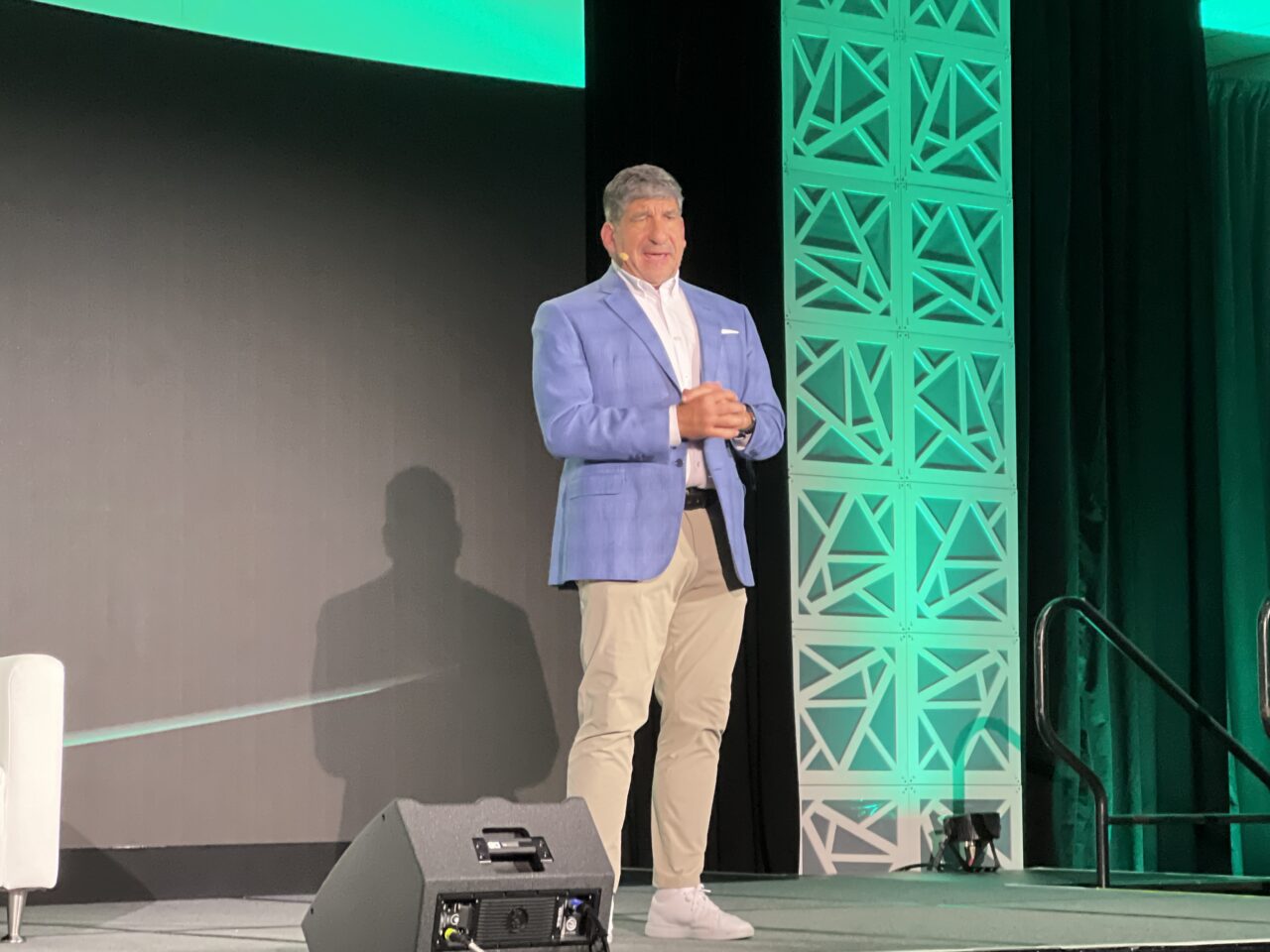
The hum of the convention center floor at FinovateSpring had barely faded when Chris Nichols, President of Institutional Banking at SouthState Bank, stepped onto the keynote stage. It wasn’t just another tech talk; it was a glimpse into a seismic shift, a fundamental platform change powered by AI and tokenization that’s about to rearrange the deckchairs of global commerce.
Nichols, a man who juggles innovation, digital assets, and a healthy dose of fintech investing at SouthState, painted a picture so vivid it felt like peering through a kaleidoscope. He spoke of a future where transactions aren’t just faster or cheaper – they’re intelligent, driven by AI agents acting on our behalf, and enabled by tokenization, that whisper from the blockchain era.
The Dawn of Programmable Micropayments
Think about it: the clunky, expensive wire transfers and even the ‘instant’ payments we use today. They’re practically relics. Nichols argues that tokenization, coupled with the burgeoning power of agentic AI, is poised to slash transaction costs to fractions of a penny. We’re talking about the kind of micropayments that were once theoretical curiosities, now becoming utterly essential for the subscription economy and the gig workforce.
“As we think this through, we see commerce evolving dramatically,” Nichols declared. “If you are a content provider or another type of digital agent and you need 1/30,000th of a cent, it changes the face of commerce.” Imagine a world where you can effortlessly pay for a single sentence of an article, or a sliver of computing power, without the overhead of traditional systems. It’s like upgrading from a horse-drawn carriage to a hyperloop – the speed, efficiency, and possibilities are simply on another planet.
This isn’t just about speed; it’s about smart money. Programmable money. Contracts that execute automatically when conditions are met. This has colossal implications for everything from lending and insurance claims to real estate fractional ownership. It’s financial plumbing that’s not just strong, but alive.
Enter the AI Agents: Your Digital Butler Army
Here’s where it gets really wild. These smart contracts and programmable money aren’t just talking to other systems; they’re increasingly talking to AI agents. Agents that are going to do the legwork. Nichols used a compelling example: planning and executing a trip to FinovateSpring. Soon, he posited, this entire process—from booking flights and hotels to paying registration fees—will be handled almost entirely by AI agents acting on your behalf.
And these aren’t just passive task-doers. The true magic, the mind-bending part, is the discovery role these agents will play. They’ll be researching, inquiring, and even negotiating. Humans might start out in the driver’s seat, but the debate, as Nichols put it, is “how much autonomy people are willing to give their agents.” The next step? Validating agents independently. The step after that? Agents creating other agents. It’s an autonomous ecosystem blooming right before our eyes.
Why Does This Matter for Banks?
So, where do our beloved (or sometimes bewildering) banks fit into this accelerating future? Nichols sees a massive opportunity: becoming the orchestration platform.
Forget the old model of just holding deposits and moving money. Banks are evolving into the central nervous system of this new digital economy. They’ll be the infrastructure layer, coordinating, automating, and securing the interactions between consumers, businesses, merchants, suppliers, payment rails, compliance systems, lenders, and critically, those burgeoning AI agents. It’s a monumental shift from being mere custodians to being architects of complex, interconnected financial workflows.
This isn’t just hype. The infrastructure that supports tokenized payments could enable true micropayments and transactions of less than a cent. Such payments may have had little utility a few years ago, but the rise of the subscription economy and the gig workforce have created demand for a new kind of payment flexibility. It’s a profound transformation, moving from a world of discrete, often manual, transactions to a continuous, intelligent flow of value.
The Autonomous Commerce Conundrum
But here’s the kicker, the sticky point that gives me pause amidst all this dazzling futurism. The original article hints at it, but it bears leaning into: the debate around autonomy. Nichols mentions humans will “initially remain in control.” But how long is ‘initially’? And what happens when agents start creating agents? Are we building a gilded cage or a genuine liberation? The potential for misuse, for unforeseen emergent behaviors in a self-creating agent ecosystem, is a ghost in the machine that even the most enthusiastic futurist can’t ignore.
This isn’t just a technological upgrade; it’s a philosophical one. As we delegate more of our financial lives to intelligent agents, we’re not just outsourcing tasks, we’re outsourcing decision-making. The lines between human intent and algorithmic execution will blur, and understanding where one ends and the other begins will become paramount. Banks, in their new role as orchestrators, will need to build in transparency and control mechanisms that are as sophisticated as the AI agents themselves. Otherwise, we risk creating systems that are incredibly efficient but utterly opaque – a double-edged sword of unprecedented power.
Banks as Orchestrators: A New Power Center
Nichols’ vision for banks as orchestration platforms is less about a specific product and more about a fundamental redefinition of their role. They’re not just providing the pipes; they’re building the smart traffic control system for the digital highway of commerce. This requires immense agility, a willingness to partner with fintechs, and a deep understanding of both traditional financial risks and the novel risks introduced by AI and distributed ledger technologies. SouthState Bank, with its historical roots and aggressive acquisitions, seems to be positioning itself precisely for this future – a proof to how established institutions are rethinking their place in a rapidly changing landscape.
The future of commerce isn’t just about better payments; it’s about intelligent, autonomous agents facilitating transactions at a scale and speed we can barely comprehend. And banks, if they embrace this paradigm shift, stand to become the indispensable backbone of this new era. It’s a daunting, exhilarating prospect.