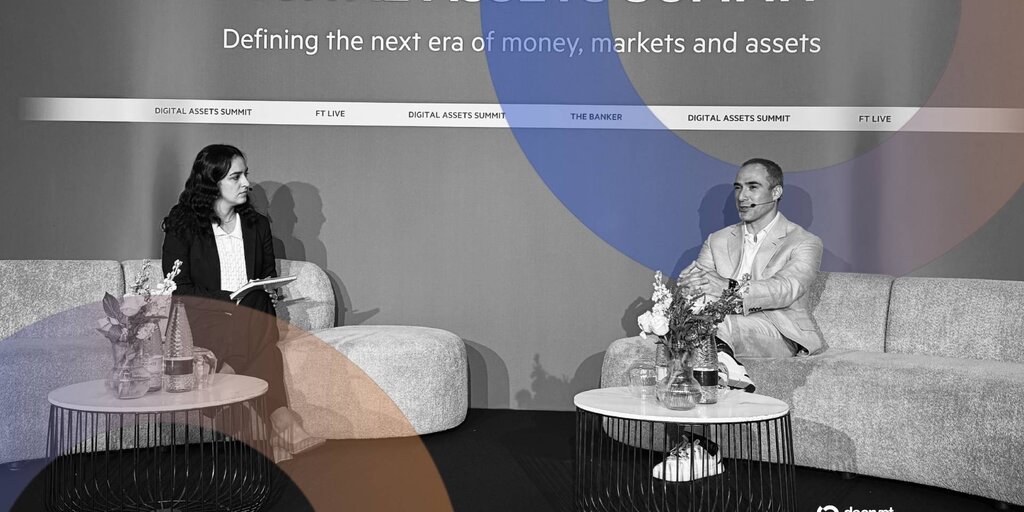
The air in Miami crackled with more than just humidity during Consensus; it hummed with the undeniable whisper of a future rapidly accelerating towards us.
And that whisper? It’s the sound of quantum computers getting terrifyingly good, fast. Charles Hoskinson, the architect behind Cardano, didn’t just talk about this looming technological shift; he painted a vivid picture of it, serving up a stark warning with a side of reassuring engineering prowess.
Here’s the thing: Hoskinson isn’t just dabbling in hypotheticals. He’s putting a clock on it. He tossed out a figure that made the room shift in their seats: a greater than 50 percent chance of a commercially viable quantum system by 2033. Think about that. Less than a decade. A machine so powerful it could, quite literally, shatter the digital locks that keep our online lives secure today. It’s like a sudden, unexpected ice age for the digital world we’ve so carefully constructed.
Why should your average crypto enthusiast or even a seasoned developer be losing sleep over this? Because so many of the blockchain networks we interact with daily are built on cryptographic foundations that are, frankly, prehistoric in the face of quantum processing. Shor’s algorithm, a name that will soon become as familiar as Bitcoin, is the ghost in the machine, capable of brute-forcing the very mathematical puzzles that protect your digital gold. We’re talking about wallets being emptied, identities being spoofed, and the very fabric of decentralized trust being unraveled. It’s not a matter of if for these networks; it’s rapidly becoming a matter of when.
The Lattice-Based Fortress
But Hoskinson isn’t one to just present problems without a blueprint for solutions. His enthusiasm for Cardano’s proactive stance is palpable. He’s championing a radical, yet elegant, shift towards lattice-based cryptography. Imagine a hyper-dimensional grid, impossibly complex and vast, where finding a specific point is easy, but traversing the structure in a way that reveals its secrets is astronomically difficult, even for a quantum beast. That’s the essence of lattices – mathematical structures so strong they’re designed to laugh in the face of both classical and quantum computation.
Cardano’s game plan is to weave these quantum-resistant algorithms into the very DNA of its network now. The goal is elegant simplicity: future-proof the system so thoroughly that even when quantum computers flex their muscles, they’ll hit a wall of computational complexity. This isn’t about slapping a bandage on a gaping wound later with disruptive hard forks. It’s about building a skyscraper with foundations designed to withstand an earthquake that hasn’t even happened yet. It’s a profoundly patient, deeply engineering-led approach that feels… well, like Cardano.
And get this – they’re not just making it up in a lab. Hoskinson pointed to the newly established FIPS 203 through 206 standards from U.S. authorities. These aren’t abstract academic musings; they’re the actual blueprints for quantum-resistant encryption that governments and enterprises are already starting to adopt. By integrating these benchmarks, Cardano isn’t just being technically forward-thinking; it’s aligning itself with the global security roadmap, a move that could be absolutely massive for institutional adoption down the line. When big money looks at blockchain, they need to see compliance and proven security, not just theoretical promise.
The cryptocurrency ecosystem faces a vital transition. Networks that delay migration risk sudden obsolescence, while those investing in lattice-based and hybrid solutions stand to gain competitive advantages.
This whole situation strikes me as a profound platform shift. We’re witnessing the dawn of the post-quantum era in cryptography, and AI is just one piece of the puzzle driving this acceleration. Just as the internet changed everything, the quantum leap will redefine digital security. Cardano’s strategy here isn’t just about defending ADA; it’s about demonstrating a model for how entire digital ecosystems can evolve to meet existential technological threats head-on. It’s about building trust not through marketing spin, but through meticulous, peer-reviewed development and a genuine understanding of the forces shaping our digital future. The community knows this, the engineers are on it, and the path forward, while challenging, is being paved with solid cryptography.
Why Does This Matter for Everyone Else?
Look, Hoskinson’s update is a stark reminder. The quantum wave is cresting, and projects that are dragging their feet, still relying on yesterday’s encryption, are essentially building sandcastles on a rapidly incoming tide. The competitive advantage for networks that embrace quantum-resistant solutions – be it lattice-based or clever hybrid approaches – isn’t just about survival; it’s about leadership in the next decade of digital finance. Cardano’s measured, almost deliberate, progress might seem slow to some, but in the face of such a monumental threat, that careful, scientific approach is exactly what inspires confidence. As 2033 looms closer, we’ll need more voices like Hoskinson’s, guiding the entire blockchain and digital asset space towards a genuinely secure future.
🧬 Related Insights
- Read more: Crypto Heist Ring Busted: $6.5M Stolen Across California
- Read more: SEC’s Atkins Signals ‘Reg Crypto’ Rollout to Unleash Token Fundraising
Frequently Asked Questions
What does lattice-based cryptography do? Lattice-based cryptography uses complex mathematical structures called lattices. These structures are extremely difficult for even powerful quantum computers to break, offering strong protection for digital data and transactions.
Will quantum computers steal my Bitcoin? Potentially, yes. Older cryptocurrencies relying on current encryption methods are vulnerable. However, projects like Cardano are actively developing and integrating quantum-resistant cryptography to safeguard against such threats before they materialize.
Is 2033 a definite deadline for quantum computers?